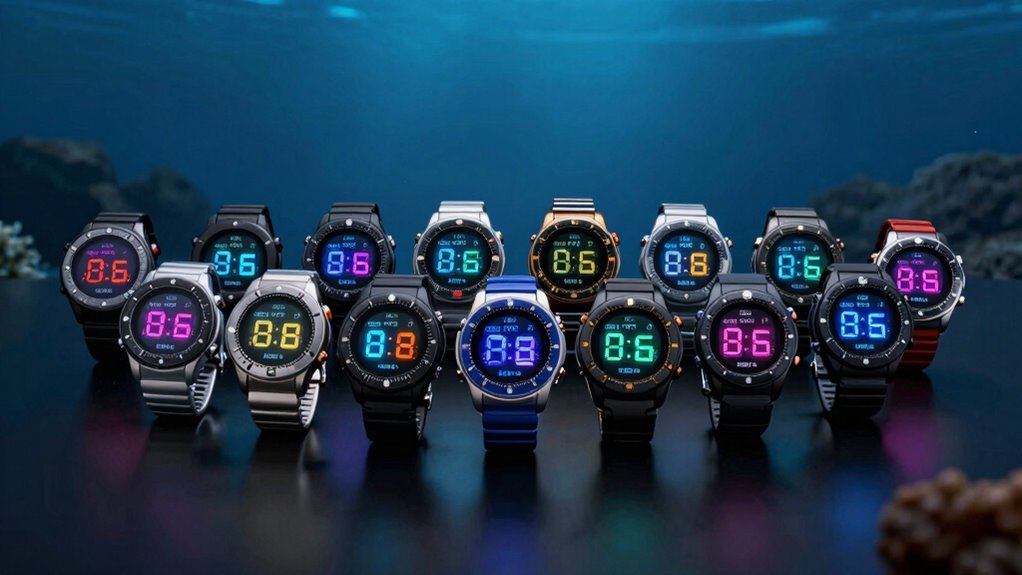

Starting with a wrist dive computer can simplify your underwater experience by providing essential data at a glance. The best overall pick for beginners is the Suunto D5 Dive Computer, known for its intuitive interface and vibrant display. For those on a budget, the Mares Puck 4 offers reliable performance without breaking the bank, while the CRESSI Leonardo 2.0 provides a straightforward design perfect for new divers. Choosing the right model involves balancing ease of use, features, and durability, which can be overwhelming for newcomers. Keep reading for a detailed breakdown of each option to find your ideal beginner dive computer.

Get sports gear delivered free with Prime
- Fast, free delivery on millions of items
- Prime Video, Amazon Music and more included
- Member-only deals all year
Complete the kit


Key Takeaways
- The best beginner dive computers prioritize ease of use and clear displays over advanced features.
- Models with air integration tend to be more expensive but offer added convenience for future diving needs.
- Budget options like the Mares Puck series still deliver reliable functionality suitable for beginners.
- Durability and water resistance are critical, especially for new divers learning to handle equipment.
- User interface simplicity often outweighs extra features for those just starting to explore diving technology.
| Genesis Centauri Dive Wrist Mount Computer |  | Best for Simplicity and Basic Monitoring | Design: Compact, lightweight | Display: Basic | Connectivity: None | VIEW ON AMAZON | See Our Full Breakdown |
| Mares Puck 4 Wrist Dive Computer |  | Best for Customizable Safety and Multigas Support | Algorithm: Bühlmann ZH-L16C with adjustable gradient factors | Gas Support: Up to 3 gases | Display Technology: Chip-on-glass | VIEW ON AMAZON | See Our Full Breakdown |
| Mares Quad Ci Wrist Dive Computer |  | Best for Versatile Dive Profiles and Advanced Features | Algorithm: Bühlmann ZH-L16C | Dive Modes: Air, Nitrox, Trimix | Display: 8-color MIP | VIEW ON AMAZON | See Our Full Breakdown |
| CRESSI Leonardo 2.0 Scuba Dive Watch |  | Best for Multi-Mode Flexibility and Device Integration | Modes: Air, Nitrox, Gauge | Control Interface: Single-button | Connectivity: iOS and Android | VIEW ON AMAZON | See Our Full Breakdown |
| Suunto D5 Dive Computer |  | Best for Color Display and Advanced Features | Water Resistance: 100m | Display: Color | Wireless Tank Pressure: Yes | VIEW ON AMAZON | See Our Full Breakdown |
| SCUBAPRO Luna 2.0 Air Integrated (AI) Wrist Scuba Dive Computer with Bluetooth |  | Best Overall for Beginners Seeking Reliable Tech | Display: High contrast black and white LCD | Control: Two button control | Wireless features: Bluetooth, wireless air integration | VIEW ON AMAZON | See Our Full Breakdown |
| Suunto D5 Dive Computer with Color Screen and Exchangeable Straps, Aqua Blue |  | Best for Divers Wanting Advanced Features and Style | Water Resistance: 100m | Features: Color screen, exchangeable straps, wireless tank pressure, vibration alarms, digital compass | Connectivity: Wireless | VIEW ON AMAZON | See Our Full Breakdown |
| Mares Puck Pro EZ Wrist Underwater Dive Computer |  | Best for Simplicity and Reliability | Display: High-contrast screen | Gas Compatibility: Nitrox 21%-50% | Algorithm: Buhlmann ZH-L16C with dual gradient factors | VIEW ON AMAZON | See Our Full Breakdown |
| Seac Partner Wrist-Mount Freediving Computer, Black, One Size |  | Best for Entry-Level Freedivers and Casual Beginners | Water Resistance: 100 meters | Battery: CR2032 (included) | Dives Recorded: Up to 99 | VIEW ON AMAZON | See Our Full Breakdown |
| wrist dive computer for beginner | Display | Connectivity |
|---|---|---|
| Genesis Centauri Dive Wrist Mo | Basic | None |
| Mares Puck 4 Wrist Dive Comput | — | Bluetooth |
| Mares Quad Ci Wrist Dive Compu | 8-color MIP | Bluetooth |
| CRESSI Leonardo 2.0 Scuba Dive | — | iOS and Android |
| Suunto D5 Dive Computer | Color | — |
| SCUBAPRO Luna 2.0 Air Integrat | High contrast black and white LCD | — |
| Suunto D5 Dive Computer with C | Color | Wireless |
| Mares Puck Pro EZ Wrist Underw | High-contrast screen | Bluetooth |
| Seac Partner Wrist-Mount Freed | Backlit | — |
More Details on Our Top Picks
Genesis Centauri Dive Wrist Mount Computer
The Genesis Centauri Dive Wrist Mount Computer stands out for its compact and lightweight design, making it an excellent choice for beginners who want essential features without complexity. Compared with more advanced options like the Mares Quad Ci, it offers a straightforward experience focused on core data, but its lack of detailed specifications and user reviews means you won’t get insights into durability or battery life. This device is ideal for new divers prioritizing ease of wear and basic dive info, but it’s less suitable if you need detailed logs or advanced features.
Pros:- Compact and lightweight design for comfort
- Provides essential dive information without complexity
- Easy to wear on the wrist
Cons:- Limited detailed specifications available
- No user reviews or ratings for insight into durability or performance
Best for: Beginners who want a simple, wrist-mounted device for basic dive monitoring
Not ideal for: Diving enthusiasts seeking detailed dive data or advanced functionality
- Design:Compact, lightweight
- Display:Basic
- Connectivity:None
- Dive Data:Essential info only
Our verdict“A good starter choice for divers seeking an uncomplicated, wrist-mounted computer for basic dive tracking.”
Mares Puck 4 Wrist Dive Computer
The Mares Puck 4 makes a compelling choice for beginners wanting a more adaptable device, offering customizable decompression algorithms and multigas support. Compared with the Genesis Centauri, it adds the ability to support up to three gases and Bluetooth connectivity, which can ease data management. Its single-button control simplifies operation, but this may feel limiting for those looking for more advanced menus or multiple controls. While it offers more versatility than basic models, it’s still designed for recreational divers and may lack the robustness needed for rigorous technical diving.
Pros:- Customizable dive algorithm for personalized safety
- Supports up to 3 gases, suitable for technical diving
- Clear, easy-to-read display
- Bluetooth connectivity for data transfer
Cons:- Entry-level design may lack some advanced features
- Single-button control can limit menu navigation
- No detailed info on battery or durability
Best for: Beginners interested in learning advanced diving with customizable options and multigas support
Not ideal for: Casual divers or those who prefer a simple, no-frills device without Bluetooth features
- Algorithm:Bühlmann ZH-L16C with adjustable gradient factors
- Gas Support:Up to 3 gases
- Display Technology:Chip-on-glass
- Control:Single-button
- Connectivity:Bluetooth
Our verdict“Ideal for beginners ready to explore more advanced dive profiles and multigas support with a user-friendly interface.”
Mares Quad Ci Wrist Dive Computer
The Mares Quad Ci offers a significant upgrade in features, supporting multiple dive modes like air, nitrox, and trimix, with a high-resolution 8-color display and integrated digital compass. Compared with the Mares Puck 4, it’s more suited for divers seeking detailed customization and integrated navigation tools, although it requires Bluetooth for full functionality. Its 20-hour battery life might be limiting for extended trips, and the complexity could be overwhelming for true beginners. This device is better suited for divers who want a more comprehensive, multi-mode experience without sacrificing readability or advanced features.
Pros:- Supports multiple dive modes including trimix
- High-resolution 8-color display for clarity
- Built-in digital compass and Bluetooth connectivity
- Supports up to 5 transmitters for detailed tank data
Cons:- Requires Bluetooth connection for full abilities
- Limited to 20 hours of battery life per charge
- Potentially complex for absolute beginners
Best for: Beginners aiming for a versatile device capable of multiple dive modes and navigation features
Not ideal for: Purely recreational divers who prefer simple interfaces or shorter dives
- Algorithm:Bühlmann ZH-L16C
- Dive Modes:Air, Nitrox, Trimix
- Display:8-color MIP
- Connectivity:Bluetooth
- Battery Life:20 hours
Our verdict“Best suited for divers looking for an all-in-one device with multiple modes and navigation capabilities, even if it adds complexity for newcomers.”
CRESSI Leonardo 2.0 Scuba Dive Watch
The Cressi Leonardo 2.0 offers versatility with multiple modes—Air, Nitrox, and Gauge—and seamless integration with smartphones via USB and infrared, making it suitable for tech-savvy beginners. Compared to simpler models like the Genesis Centauri, it provides a broader set of features and alerts, which can enhance safety. However, its lack of specified battery life and potential complexity could pose challenges for absolute beginners without some prior experience. This device makes sense for divers who want detailed logs and easy device connection, but it may be overkill for those just starting out.
Pros:- Supports multiple dive modes including Gauge
- Easy-to-use single-button interface
- Seamless connectivity with iOS and Android devices
- Quick alerts for safety
Cons:- No clear info on battery life or replacement
- Potentially complex for absolute beginners
Best for: Beginners comfortable with technology who want detailed logs and multi-mode support
Not ideal for: Complete novices preferring straightforward, no-fuss devices without smartphone integration
- Modes:Air, Nitrox, Gauge
- Control Interface:Single-button
- Connectivity:iOS and Android
- Data Transfer:USB and infrared
Our verdict“Suitable for tech-savvy beginners seeking detailed dive data and smartphone connectivity, with some learning curve involved.”
Suunto D5 Dive Computer
The Suunto D5 combines a vibrant color display with reliable performance, including wireless tank pressure monitoring and vibration alarms. It’s a strong choice for beginners wanting a visually engaging device with essential safety alerts. Compared to the Mares Puck 4, it offers more advanced, user-friendly features and a stylish appearance, though the lack of detailed specifications and potentially high price might be a concern for some. This pick makes the most sense for new divers who value intuitive controls and a colorful interface over absolute simplicity.
Pros:- Color display enhances readability
- Wireless tank pressure monitoring adds convenience
- Vibration alarms improve safety awareness
- Waterproof up to 100 meters
Cons:- Limited detailed specs available
- Higher cost compared to basic models
Best for: Beginner divers seeking a visually appealing, feature-rich wrist computer with safety alerts
Not ideal for: Budget-conscious beginners or those who prefer minimal features and simpler interfaces
- Water Resistance:100m
- Display:Color
- Wireless Tank Pressure:Yes
- Alarms:Vibration
- Additional Features:Digital compass
Our verdict“A good choice for beginners wanting a vibrant, feature-packed dive computer that emphasizes safety and ease of use.”
SCUBAPRO Luna 2.0 Air Integrated (AI) Wrist Scuba Dive Computer with Bluetooth
The SCUBAPRO Luna 2.0 stands out for its intuitive controls and clear display, making it an excellent choice for newcomers who want reliable data without overwhelming complexity. Its high-contrast LCD ensures easy readability underwater, while wireless air integration simplifies tank pressure monitoring—an advantage over models like the Mares Puck Pro EZ, which lacks wireless features. However, its limited to wrist mounting and the need for Bluetooth setup could be a hurdle for absolute beginners unfamiliar with tech integrations. The multiple algorithm options offer customization, but that might be confusing for first-time users. This pick suits beginner divers who prioritize clear information and modern features, willing to navigate some tech setup.
Pros:- Easy-to-read high contrast display with backlight
- Wireless air integration for tank monitoring
- Intuitive two-button control system
- Multiple algorithms for personalized diving
Cons:- Limited wrist-only mounting may not fit all preferences
- Requires Bluetooth connection for full features
Best for: Beginner divers who want a dependable, easy-to-read computer with wireless air integration.
Not ideal for: Divers preferring simple, non-wireless watches or those uncomfortable with Bluetooth setup.
- Display:High contrast black and white LCD
- Control:Two button control
- Wireless features:Bluetooth, wireless air integration
- Housing:Thermoplastic with oil fill technology
- Algorithms:Predictive Multi-Gas Buhlmann ZH-L16 ADT MB PMG, ZH-L16+GF
Our verdict“This computer offers a balanced mix of modern features and straightforward operation, perfect for tech-savvy beginners ready to learn advanced options.”
Suunto D5 Dive Computer with Color Screen and Exchangeable Straps, Aqua Blue
The Suunto D5 offers a vibrant color display and customizable straps, making it appealing for beginners who want a visually engaging device. Its wireless connectivity, tank pressure monitoring, and vibration alarms add layers of functionality compared to simpler models like the Seac Partner. However, the device’s extensive features may feel overwhelming for those new to diving tech, and limited detailed specs mean some users might find it hard to gauge its full capabilities upfront. This model is better suited to divers who appreciate style and are willing to learn more complex controls. It’s an ideal pick for style-conscious beginners planning to upgrade their gear later.
Pros:- Color display with customizable straps
- Water-resistant up to 100 meters
- Wireless connectivity and alarms
- Includes digital compass
Cons:- Potentially complex interface for absolute beginners
- Limited detailed technical specifications available
Best for: Beginners interested in a visually appealing computer with advanced features and future upgrade potential.
Not ideal for: Total newcomers who prefer straightforward, minimal devices without complex controls or detailed specs.
- Water Resistance:100m
- Features:Color screen, exchangeable straps, wireless tank pressure, vibration alarms, digital compass
- Connectivity:Wireless
- Display:Color
- Battery:Not specified
Our verdict“A stylish, feature-rich choice for newcomers eager to explore more advanced dive tech over time.”
Mares Puck Pro EZ Wrist Underwater Dive Computer
The Mares Puck Pro EZ emphasizes straightforward operation with its high-contrast screen and single-button control, making it a strong candidate for beginner divers who prefer simplicity. It supports Nitrox mixtures and uses advanced decompression algorithms, providing a step-up in sophistication over basic watches like the Seac Partner. But, its limited to 100 dives per battery cycle and a bulky design could frustrate users seeking a lightweight, compact device. This computer suits those who value clear data and reliable performance over bells and whistles. It’s an excellent choice for beginners prioritizing ease and dependability, with some tech tradeoffs.
Pros:- Clear, high-contrast display
- Supports Nitrox mixtures
- Intuitive single-button operation
- Bluetooth for dive log transfers
Cons:- Battery replacement can be technical
- Bulky design may not suit all users
Best for: Beginners who want an easy, dependable computer with support for Nitrox and simple controls.
Not ideal for: Dives planning to exceed 100 dives per battery cycle or those seeking ultra-light equipment.
- Display:High-contrast screen
- Gas Compatibility:Nitrox 21%-50%
- Algorithm:Buhlmann ZH-L16C with dual gradient factors
- Power:Replaceable battery supports up to 100 dives
- Connectivity:Bluetooth
Our verdict“A straightforward, reliable choice for beginner divers who want consistent data with minimal fuss.”
Seac Partner Wrist-Mount Freediving Computer, Black, One Size
The Seac Partner simplifies diving with its lightweight design and easy-to-read backlit display, making it ideal for those starting in freediving or casual scuba. Its straightforward interface records essential metrics like dive and surface times, depth, and temperature, but lacks the advanced features of wrist computers like the SCUBAPRO Luna 2.0. Battery life is decent, yet it may require replacement after about a year, and its limited data logging could be a drawback for those wanting detailed dive histories. This device is best for beginners who want basic, reliable data in a comfortable, easy-to-use package. It’s perfect for relaxed diving or those new to tech-heavy equipment.
Pros:- Easy-to-use with intuitive interface
- Lightweight and comfortable
- Clear backlit display
- Supports up to 99 dives
Cons:- Limited advanced features
- Battery replacement may be tricky for some
Best for: Beginner freedivers or casual divers seeking a simple, lightweight wrist computer.
Not ideal for: Divers wanting detailed dive logs or advanced features beyond basic metrics.
- Water Resistance:100 meters
- Battery:CR2032 (included)
- Dives Recorded:Up to 99
- Display:Backlit
- Material:Wrist strap suitable for wetsuits
Our verdict“A practical, user-friendly option for beginners focused on essential dive data without complexity.”

How We Picked
These products were selected based on their ease of use, readability, build quality, and value for beginners. We prioritized models that offer straightforward interfaces, reliable performance, and durability suitable for new divers. Additional features like air integration or activity tracking were considered secondary unless they significantly enhance the beginner experience. The ranking reflects a balance between affordability and functionality, ensuring newcomers get reliable tools without unnecessary complexity or cost.| wrist dive computer for beginner | Connectivity |
|---|---|
| Genesis Centauri Dive Wrist Mo | None |
| Mares Puck 4 Wrist Dive Comput | Bluetooth |
| Mares Quad Ci Wrist Dive Compu | Bluetooth |
| CRESSI Leonardo 2.0 Scuba Dive | iOS and Android |
| Suunto D5 Dive Computer | — |
| SCUBAPRO Luna 2.0 Air Integrat | — |
| Suunto D5 Dive Computer with C | Wireless |
| Mares Puck Pro EZ Wrist Underw | Bluetooth |
| Seac Partner Wrist-Mount Freed | — |
Factors to Consider When Choosing Wrist Dive Computer For Beginners
Choosing a wrist dive computer as a beginner involves understanding several factors that can impact your safety, learning curve, and overall experience. While extra features can be tempting, simplicity and reliability often matter most at the start. Making the right choice involves assessing how intuitive the device is, its durability, and whether it offers future-proof features like air integration or multiple dive modes. Here are key considerations to help guide your decision beyond the product reviews.Ease of Use and Interface
For beginners, a clear, simple interface is essential. Look for large, easy-to-read displays with straightforward controls. Devices with intuitive menus minimize the learning curve and reduce potential errors underwater. Overly complex interfaces can distract from your dive and cause frustration, so prioritize models that emphasize user-friendly design.
Display Quality and Readability
A bright, high-contrast display ensures you can easily check vital data like depth, time, and remaining nitrogen levels at a glance. Color screens can be helpful but may drain the battery faster. Test how well the display performs in different lighting conditions—especially underwater—since clarity can vary significantly between models.
Durability and Water Resistance
Beginners often underestimate how tough dive computers need to be. Look for models with sturdy construction, good water resistance ratings (at least 100 meters), and scratch-resistant screens. A durable device can withstand accidental bumps and exposure to saltwater, extending its lifespan and maintaining reliability.
Battery Life and Power Management
Battery life varies widely, and frequent replacements or recharging can be inconvenient underwater. Choose models with long-lasting batteries, and check whether they are user-replaceable or rechargeable. Some devices also have power-saving modes that extend usability between charges, which is helpful for longer dive trips.
Additional Features and Future Compatibility
While basic models focus on core functions, some beginners might benefit from extra features like air integration, dive logging, or activity tracking. Consider whether these features align with your future diving plans. However, avoid overly complicated systems that could overwhelm new users; simplicity often outweighs bells and whistles at this stage.
Frequently Asked Questions
Is it better to buy a simple dive computer or one with more features for a beginner?
A simple dive computer is generally better for beginners because it reduces complexity and helps you focus on learning the basics of diving. Extra features like air integration or multiple dive modes can be useful later but may overwhelm new divers initially. Starting with a straightforward device allows you to build confidence and understanding before upgrading to more advanced models.
How important is air integration for a beginner’s wrist dive computer?
Air integration offers convenience by monitoring your tank pressure and remaining air supply, but it is not essential for beginners. Many reliable models without air integration provide all the necessary data for safe diving. As you gain experience and plan more advanced dives, you might consider models with this feature, but initially, simplicity and ease of use should take priority.
Can I use a wrist dive computer for freediving or only scuba diving?
Most wrist dive computers are designed primarily for scuba diving, with features tailored for that activity. However, some models, like the Seac Partner, are suitable for freediving as well, offering depth and time tracking without unnecessary features. Check each model’s specifications to ensure it aligns with your specific type of diving.
How often should I replace or recharge the battery on my beginner dive computer?
Battery life depends on the model, but most beginner devices last between several months to a year with regular use. Recharging or replacing batteries should be done before a trip to avoid interruptions. Some models notify you when the battery is low, giving you ample warning to prepare for your next dive. Always follow manufacturer guidelines for maintenance to ensure safety and reliability.
Is a wrist-mounted dive computer more reliable than a console-mounted one?
Wrist-mounted dive computers are generally preferred for their convenience and quick accessibility during dives. They are designed to withstand underwater conditions and are less likely to be misplaced. Console-mounted units can be more durable in some cases but are less practical for beginners who want quick, easy access to their data. Overall, wrist models tend to be more user-friendly for new divers.
Conclusion
For beginners seeking a reliable, easy-to-use entry point, the Suunto D5 Dive Computer stands out as the best overall choice, combining clarity, durability, and straightforward operation. Budget-conscious newcomers will appreciate the Mares Puck 4 for its affordability and solid performance. If you prioritize a device with a colorful display and customizable straps, the Suunto D5 with Color Screen offers added personalization. Divers looking for a device with integrated Bluetooth or air management should consider options like the SCUBAPRO Luna 2.0. Ultimately, your choice depends on your diving goals, budget, and preference for features—prioritize simplicity if you’re just starting, but don’t overlook future expandability.Fall Picks
fall essentials
As an affiliate, we earn on qualifying purchases.