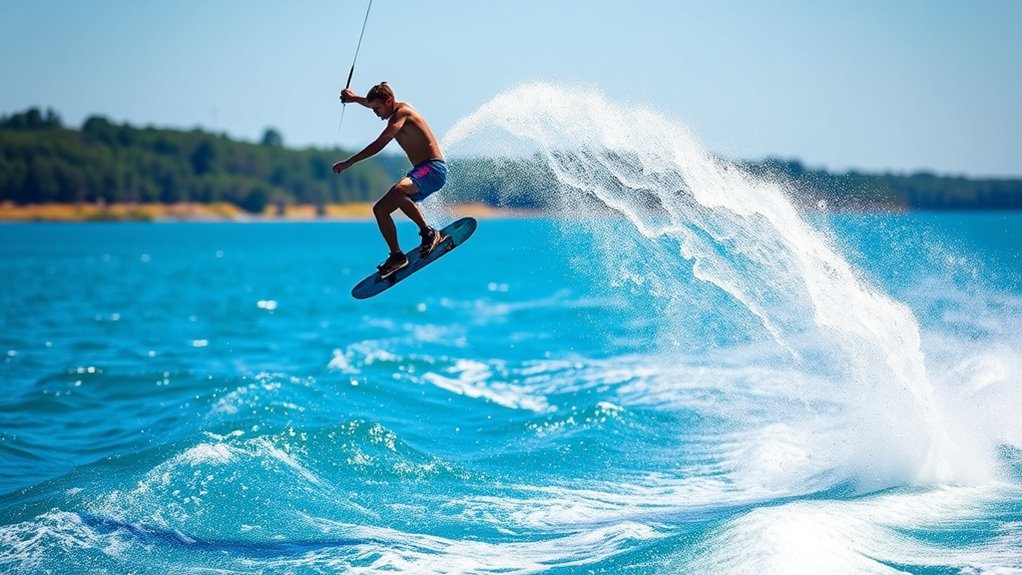

To master basic wakeboarding tricks like jumps and 180s, start by practicing your approach at a steady speed of 18-22 mph. Bend your knees before jumping for lift and keep your eyes on the landing. For the 180, twist your shoulders and hips as you descend to smoothly rotate. Don’t forget your safety gear, including a helmet and life jacket. Consistent practice will boost your confidence and skills. Want more tips on progression and safety?

Get sports gear delivered free — and shop member deals
- Fast, free delivery on millions of items
- Access to Prime Big Deal Days deals on October 6–7
- Prime Video, Amazon Music and more included
Key Takeaways
- Master foundational tricks like jumps and 180s to build confidence and prepare for more advanced maneuvers.
- Approach jumps at a speed of 18-22 mph, bending your knees for optimal lift off.
- For 180s, twist your shoulders and hips during descent to facilitate a smooth rotation.
- Always wear a properly fitted life jacket and helmet for safety while practicing tricks.
- Communicate clearly with the boat driver to ensure well-timed acceleration for optimal jump performance.
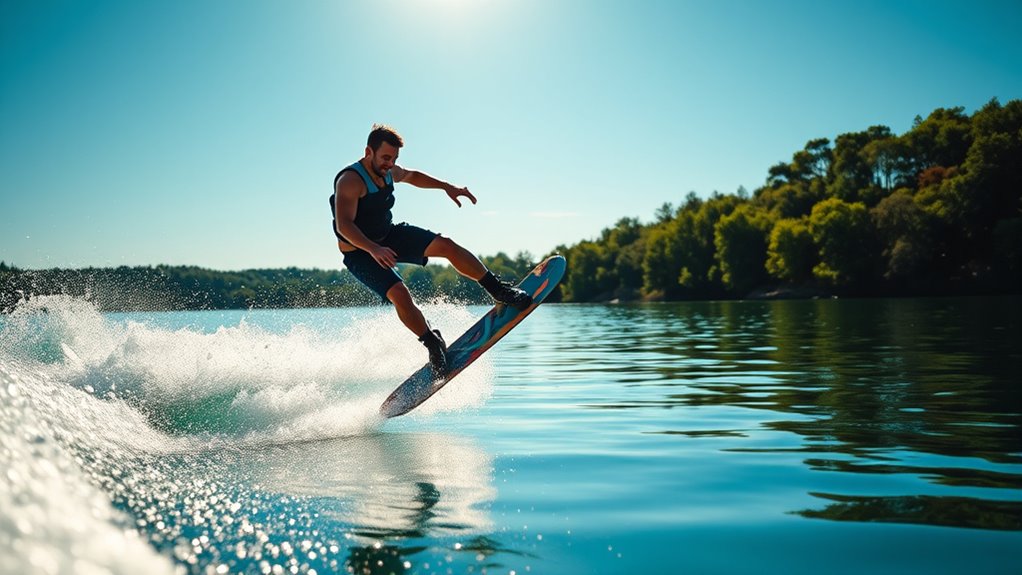
Whether you’re a beginner or looking to elevate your skills, learning wakeboarding tricks can be an exhilarating journey. To get started, you’ll want to focus on the basics, including jumps and 180s. These tricks not only boost your confidence but also lay the groundwork for more advanced maneuvers later on. Before you hit the water, though, make sure you’ve got your safety gear in place. A properly fitted life jacket is essential, and it’s wise to wear a helmet, especially if you’re new to the sport.
Next, let’s talk about boat handling. Understanding how the boat operates is vital for your safety and performance. You’ll want to work with a driver who knows how to create a good wake. A well-timed acceleration when you’re ready to jump can make all the difference. Practicing with a skilled driver will help you learn how to position yourself against the wake and get the lift you need for those initial jumps. Communicate clearly with them; let them know when you’re ready to go.
When you’re ready to try a jump, start small. Approach the wake with a steady speed—around 18 to 22 mph is a good range for beginners. As you near the wake, bend your knees and prepare to pop off the top. Keep your eyes on the landing, and remember to maintain a solid stance. You want to land with your knees slightly bent to absorb the impact. If you’ve got your technique down, you’ll feel the thrill of breaking free from the water, even if it’s just for a moment. Additionally, ensuring your equipment is well-maintained, like checking the right oil for airless sprayers, can enhance your overall experience.
Once you’ve mastered the jump, it’s time to tackle the 180. This trick involves turning your board 180 degrees in the air. Begin by performing a jump, just like before, but as you’re coming down, twist your shoulders and hips in the direction you want to go. It’s all about timing and body movement; the more you practice, the more natural it’ll feel. Again, landing with your knees bent will help keep you stable.
With consistent practice, your confidence will grow, and you’ll find yourself enthusiastic to try more advanced tricks. Always remember that safety gear is your best friend, and good boat handling will enhance your experience. Enjoy the ride and have fun pushing your limits!
As an affiliate, we earn on qualifying purchases.
Frequently Asked Questions
What Equipment Do I Need for Beginner Wakeboarding Tricks?
For beginner wakeboarding tricks, you’ll need some essential wakeboarding gear. Start with a properly fitting wakeboard and boots that provide good ankle support. A life vest is vital for safety, and don’t forget a tow rope designed for wakeboarding. To enhance your experience, consider wearing a helmet for added protection. These beginner tips will help you feel more secure on the water, allowing you to focus on mastering those exciting tricks!
How Can I Prevent Injuries While Practicing Tricks?
To prevent injuries while practicing tricks, always wear protective gear like a helmet and impact vest. These can substantially reduce the risk of injury. Also, don’t skip your warm-up routines; they’re essential for loosening your muscles and increasing flexibility. Spend at least 10 minutes stretching and engaging in light exercises before hitting the water. By prioritizing safety and preparation, you’ll enjoy your wakeboarding sessions while minimizing the risk of injury.
What Is the Best Boat Speed for Learning Jumps?
Think of boat speed as the wind beneath your wings. For learning jumps, you’ll want to keep the speed between 18 to 22 mph, depending on water conditions. Smooth water allows for a slightly faster pace, while choppy conditions might require you to slow down a bit. Finding that sweet spot helps you build confidence and control, making it easier to execute your jumps safely and effectively. Enjoy the ride!
How Long Does It Take to Master Basic Tricks?
It usually takes a few weeks to months to master basic tricks, depending on your commitment and practice. You’ll need to practice patience as you develop your skills. Focus on building confidence with each ride, and don’t rush the process. Everyone progresses at their own pace, so celebrate small victories along the way. With consistent effort, you’ll find yourself landing those tricks and enjoying the thrill of wakeboarding even more!
Can I Learn Wakeboarding Tricks Without a Coach?
Absolutely, you can learn wakeboarding tricks without a coach! With enough determination and a sprinkle of courage, you’ll rocket through trick progression like a superhero! Start with the basics, and as you gain confidence, you can plunge into advanced techniques. Just remember, practice makes perfect! Watch videos, take notes, and don’t forget to laugh at your wipeouts—they’re part of the journey. So grab that board and hit the water!
Conclusion
Now that you’ve tackled the basics of jumps and 180s, the real adventure awaits. Picture yourself soaring above the water, adrenaline coursing through your veins, as you prepare for that perfect landing. Will you stick the trick, or will it be a splashy wipeout? Each attempt brings you closer to mastering your skills. So grab your board, feel the pull of the rope, and plunge into the excitement. Who knows what amazing tricks you’ll conquer next?
NFL season / tailgating Picks
team gear
As an affiliate, we earn on qualifying purchases.