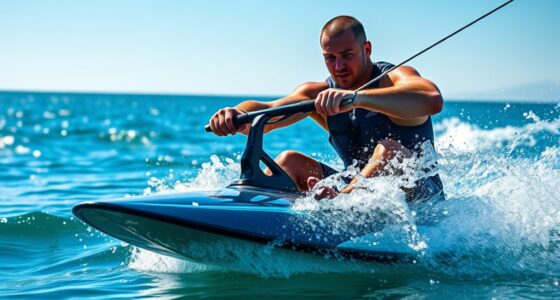
Wakeboarding started in the 1980s when pioneers like Tony Finn mixed surfing, skiing, and skateboarding into an exciting new sport. Early boards were improvised yet sparked creativity among enthusiasts. Over the years, specialized equipment evolved, enhancing stability and control, while advancements in boat design created larger wakes for daring tricks. Today, wakeboarding thrives globally, showcasing impressive athleticism and innovation. Discover how this sport’s rich history and ongoing evolution continue to inspire new generations of riders.
Key Takeaways
- Wakeboarding originated in the 1980s, merging techniques from surfing, skiing, and skateboarding, led by pioneers like Tony Finn.
- Specialized wakeboards and improved bindings were developed, enhancing stability, control, and rider safety for executing tricks.
- Technological advancements in wakeboarding boats created larger wakes, facilitating more complex maneuvers and elevating the sport’s performance level.
- The sport has grown significantly, with competitions showcasing impressive athleticism and creativity, becoming a popular water sport worldwide.
- Wakeboarding continues to evolve, blending innovation with its rich history, inspiring new generations of riders to explore the sport’s possibilities.
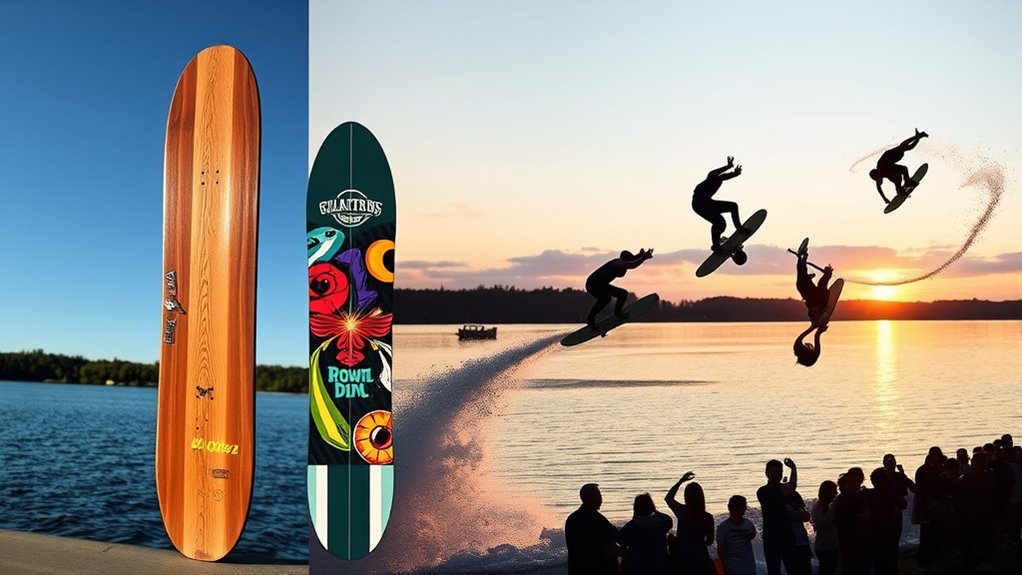
Wakeboarding has evolved into a popular water sport, blending elements of surfing, snowboarding, and water skiing. You might be surprised to learn that its roots stretch back to the 1980s, when a few adventurous souls began experimenting with riding on water in a new way. These early pioneers, driven by their love for both surfing and skiing, took to the water with makeshift boards and ropes, laying the groundwork for what would become a dynamic sport that you can enjoy today.
Wakeboarding blends surfing, snowboarding, and skiing, with its roots dating back to adventurous pioneers in the 1980s.
These pioneers, like Tony Finn and others, played essential roles in wakeboarding‘s inception. They combined existing water sports techniques, incorporating aspects of skateboarding and surfing to create a unique experience. As you look back at those early days, it’s evident that their creativity and passion paved the way for the sport’s development. They didn’t have the advanced equipment you see today, but they certainly had the spirit of innovation.
As the sport grew, technological advancements began to emerge, considerably changing how wakeboarding was practiced. The introduction of specialized wakeboards, designed with specific shapes and sizes, allowed riders to perform tricks and maneuvers that were previously unimaginable. You’d feel the difference when you hopped on one of these boards, as they provided more stability and control. Additionally, the bindings evolved to keep riders secure while allowing for easier entry and exit. This meant you could focus more on perfecting your moves rather than worrying about staying on the board.
The evolution of boats designed specifically for wakeboarding also played a pivotal role. These boats feature enhanced hull designs that create larger wakes, giving you the perfect canvas to perform tricks. It’s fascinating to see how these advancements have not only made the sport more accessible but have also elevated the level of skill within the community. You can now witness incredible feats of athleticism at competitions around the world, showcasing the sport’s growth. Interestingly, the average output of bike generators is around 100-200 watts, which could power devices for wakeboarding enthusiasts during their outings.
Today, wakeboarding continues to thrive, thanks to the foundations laid by those early pioneers and the ongoing innovations in equipment and technology. As you grab your board and hit the water, you’re part of a rich history that blends creativity, passion, and technical skill. Your journey on the water is a continuation of a legacy that’s still evolving, inviting you to explore new horizons in this exhilarating sport.
Frequently Asked Questions
What Equipment Do I Need to Start Wakeboarding?
To start wakeboarding, you’ll need a good wakeboard, bindings, and a tow rope. A boat with the right horsepower is essential, and don’t forget about boat maintenance to guarantee everything runs smoothly. You might also consider a life jacket for safety. As you get comfortable, you’ll want to practice various wakeboard tricks, which can enhance your skills and make your sessions even more fun. So gear up and get ready to ride!
How Do I Choose the Right Wakeboard Size?
Choosing the right wakeboard size isn’t rocket science, but it sure feels like it sometimes! Start by considering your weight and skill level—lighter folks need smaller boards, while heavier riders might prefer larger ones. Don’t forget about wakeboarding styles; if you’re into tricks, a shorter board’s your friend. And remember, wakeboard maintenance is key! A well-cared board lasts longer and performs better, so don’t neglect it just because you’re having too much fun!
What Are Common Injuries in Wakeboarding?
Common injuries in wakeboarding include sprains, fractures, and shoulder dislocations. You might also experience rope burns or concussions from falls. To reduce your risk, focus on injury prevention techniques like wearing a life jacket, using proper equipment, and practicing good technique. Always warm up before hitting the water and consider taking lessons if you’re new. Staying aware of your surroundings and knowing your limits can also help you stay safe while enjoying the sport.
Is Wakeboarding Suitable for Beginners?
Yes, wakeboarding can be suitable for beginners! To start safely, make sure you wear a life jacket and use a board that fits your skill level. Begin in calm water and practice getting up with a coach or experienced friend. Focus on water safety by learning how to fall correctly and signaling to the boat driver. Remember these beginner tips, and you’ll enjoy your time on the water while building your confidence!
What Are the Best Wakeboarding Locations Worldwide?
The best wakeboarding locations worldwide include spots like Lake Powell in the U.S., the Gold Coast in Australia, and the canals of Amsterdam. You’ll love these places for their stunning scenery and excellent water quality. Just make sure you check local regulations before you go, as some areas have specific rules about wakeboarding times and zones. Enjoy the ride and soak in the atmosphere at these incredible destinations!
Conclusion
In the grand tapestry of water sports, wakeboarding stands as a vibrant thread, woven from the dreams of pioneers and the thrill-seeking spirit of enthusiasts. You’ve journeyed through its evolution, witnessing how it transformed from a playful pastime to a global phenomenon. As you embrace this exhilarating sport, remember that each ride is not just a dance on water, but a celebration of innovation, camaraderie, and the relentless pursuit of adventure that defines the human spirit.