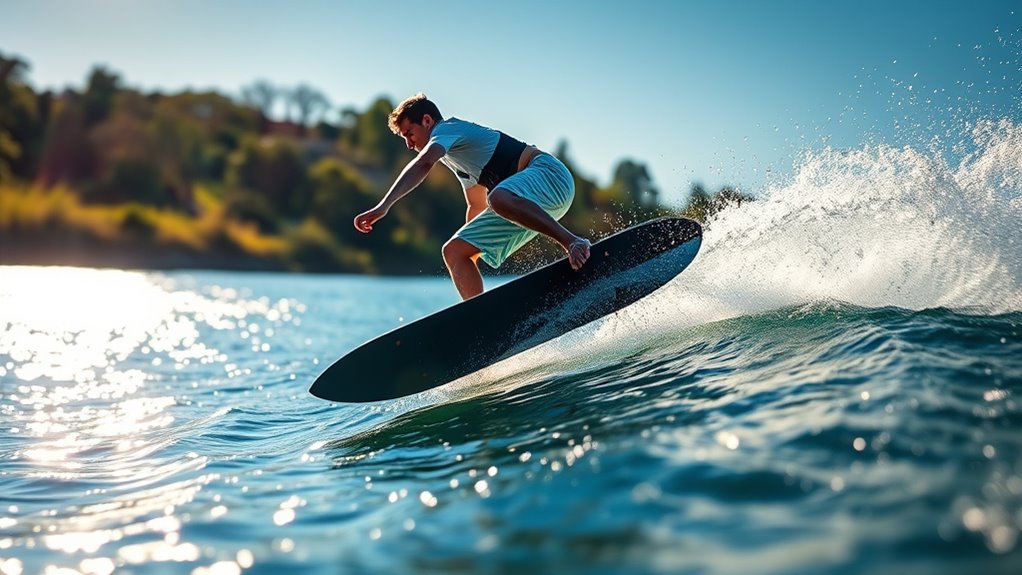

To lock in your carves, focus on smooth edge progressions by shifting your weight gradually from heels to toes or vice versa. Maintain slight knee bend, keep your body aligned, and stay relaxed to enhance control. Feeling the pressure changes on your feet helps you time your turns precisely when wake shape shifts. Managing your edge pressure and body position consistently will improve your balance and carving technique. Keep exploring to master your wakeboarding edge control even better.
Key Takeaways
- Shift your weight smoothly from heels to toes (or vice versa) to initiate and maintain a controlled carve.
- Keep knees slightly bent and align your body with the board for better edge stability.
- Use core muscles and relaxed arms to support precise and fluid edge transitions.
- Anticipate wake shape changes to adjust pressure and lock in your carve effectively.
- Practice consistent edge pressure shifts to develop muscle memory and improve turn control.
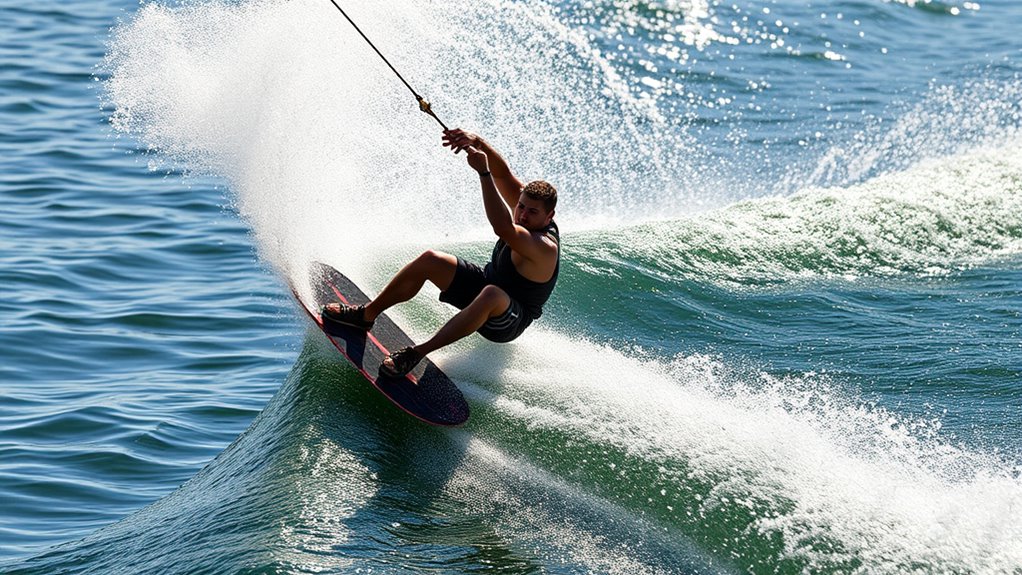
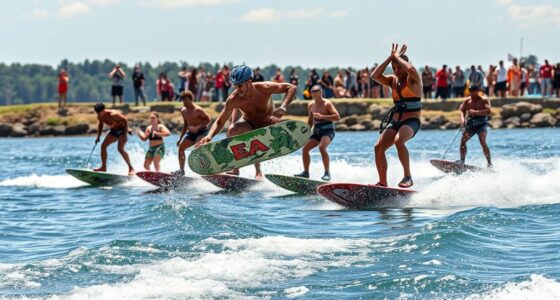
Mastering wakeboarding edge control is essential for maintaining balance and executing smooth turns on the water. When you’re carving through the wake, understanding boat wake dynamics becomes imperative. The wake created by the boat isn’t static; it varies based on speed, weight distribution, and boat type. Recognizing how these factors influence the wake helps you anticipate its shape and adjust your edge pressure accordingly. As you approach a turn, you want to shift your weight smoothly from your heels to your toes, or vice versa, to switch your edge seamlessly. This is where edge transition techniques come into play—they’re your tools for controlling your movement and maintaining stability through the turn.
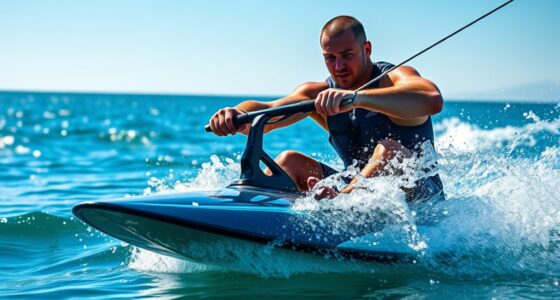
When you begin a turn, your first move should be to apply pressure to your front foot, angling your board toward the wake. This initial edge engagement is essential because it sets the tone for a clean carve. As you enter the turn, keep your knees slightly bent and your body aligned with your board. Your arms should stay relaxed, while your core does the work of keeping you balanced. As you reach the apex of the turn, gradually transfer your weight onto your back foot to complete the carve. This smooth transfer of weight—your edge transition—is what helps you lock into the turn and avoid slipping or losing control.
Practicing consistent edge transition techniques will help you develop muscle memory, making your turns more precise and fluid. Focus on feeling the change in pressure on your feet, which signals that you’re shifting from one edge to the other. The goal is to make these transitions fluid, without abrupt movements that can destabilize you or cause your line to break. Additionally, understanding boat wake dynamics allows you to adjust your technique proactively, enhancing your overall control and ride quality. As you get better, you’ll notice that your ability to read the boat wake dynamics improves, allowing you to time your edge changes perfectly in response to the wake’s shape. This sync between your technique and the wake’s movement results in tighter, more controlled turns and a more enjoyable ride.
Frequently Asked Questions
How Does Boat Speed Affect Edge Control?
Boat speed plays a vital role in your edge control because speed variation directly impacts wake dynamics. As you increase speed, the wake becomes more defined, making it easier to lock in your carve. Conversely, slower speeds produce flatter wakes, challenging your stability. By adjusting your speed accordingly, you can better manage your edge control, allowing for cleaner, more controlled turns that improve your overall wakeboarding performance.
What Are Common Mistakes When Trying to Lock in Carves?
When you try to lock in carves, common mistakes include not maintaining proper balance, which causes your balance shifts and makes it harder to control your edge. You might also rely too much on wrist flicks instead of body rotation, leading to inconsistent edges. Focus on keeping your weight centered and using your whole body to carve smoothly. Proper technique guarantees you stay locked in and make clean, controlled turns.
How Can I Improve My Transition Between Edges?
To improve your progression between edges, focus on increasing ankle flexibility and grip strength. Keep your knees bent and your ankles relaxed to smoothly shift weight from one edge to the other. Practice ankle stretches and grip exercises regularly to enhance control. By maintaining a balanced stance and engaging your core, you’ll make transitions more fluid, locking in your carves with greater precision and confidence.
Does Board Shape Influence Edge Control Effectiveness?
Yes, your board shape considerably influences your edge control effectiveness. A wider nose and tapered tail help you lock into turns, giving you better stability. Board material also plays a role; lighter, responsive materials like fiberglass enhance control. Fin configuration impacts grip and maneuverability—more fins provide stability, while fewer fins offer quicker, sharper turns. Understanding how these factors work together allows you to optimize your edge control and carve more confidently on the water.
What Role Does Body Positioning Play in Edge Stability?
Your body positioning is vital for edge stability. By maintaining proper stance balance, you guarantee a solid base, preventing slips and wobbling. Engaging your core keeps your movements controlled and precise, allowing you to lock in your carves confidently. Focus on staying relaxed yet engaged, shifting your weight smoothly, and keeping your hips aligned. This combination of stance balance and core engagement helps you carve with better control and stability.
Conclusion
So, next time you think you’re mastering your wakeboarding edge, remember: the real trick is not falling flat. Ironically, locking in that perfect carve feels like a small victory, but it’s often what keeps you from wiping out spectacularly. Embrace the control, even if it means slowing down a bit. After all, you didn’t sign up for a wild ride—just a smooth, stylish glide. Keep practicing, and soon, you’ll be carving with effortless flair.