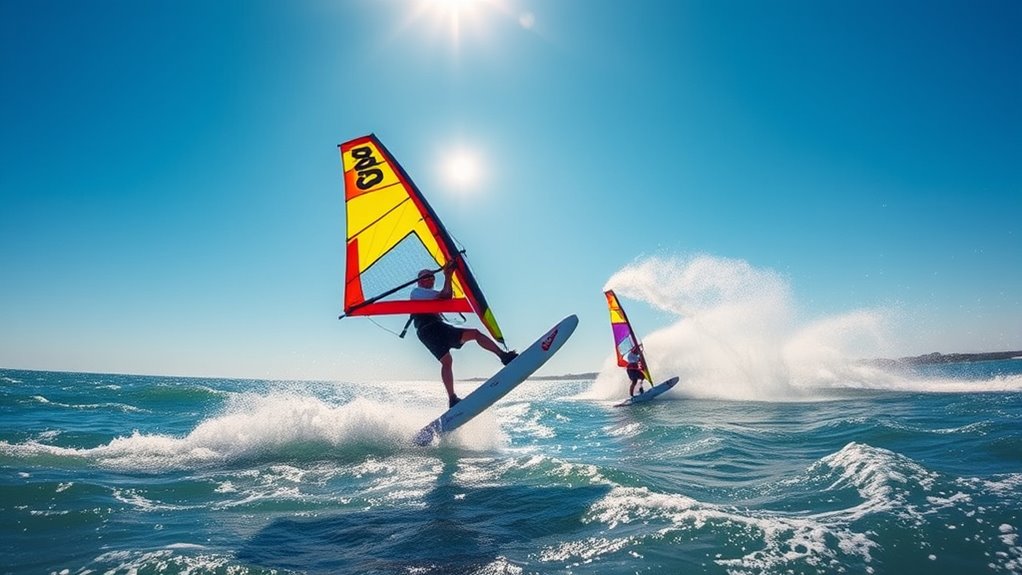

Advanced wingfoil maneuvers like tacks, jibes, and 360s can really elevate your riding skills. To nail a tack, shift your weight forward, turn the nose into the wind, and keep the wing smoothly overhead. For jibes, edge slightly upwind and switch your grip as the wing goes behind you. When attempting a 360, gain speed, dip the board, and coordinate your body with the wing. Mastering these moves can enhance your control and style, letting you ride with confidence. Keep exploring to learn even more tips!
Key Takeaways
- Master tacking by shifting weight forward, turning the board smoothly into the wind, and maintaining focus on your destination for balance.
- Execute jibes by edging slightly upwind, timing your wing release, and switching grip while keeping the foil flying throughout the maneuver.
- Prepare for a 360 by gaining speed, performing a controlled jibe, and coordinating body movements with the wing’s motion for a smooth rotation.
- Enhance control and style by regularly practicing these maneuvers, which increases confidence and allows for handling various wind conditions.
- Invest in lighter wings and responsive boards to improve maneuverability and make advanced techniques more accessible during your wingfoiling progression.

Have you ever wondered how to elevate your wingfoiling skills? Mastering advanced maneuvers like tacks, jibes, and 360s can take your riding to the next level. These techniques not only enhance your control and style but also help you navigate various wind conditions more efficiently. By focusing on these wingfoil techniques, you’ll impress your friends and boost your confidence on the water.
First, let’s dive into tacking. To execute a tack, you need to make a smooth shift from one direction to another. Start by shifting your weight onto your front foot and turning the nose of your board into the wind. As you do this, keep your wing in front of you and gradually release it while smoothly repositioning it overhead. Don’t forget to keep your eyes on your destination. This focus will help you maintain your balance and control. Practicing this maneuver will help you gain the confidence to perform it under different conditions.
Master the art of tacking by shifting your weight, turning into the wind, and keeping your eyes on your destination for better control.
Next up is the jibe, which is all about turning downwind. To initiate a jibe, start by edging your board slightly upwind. As the wind shifts, you’ll want to release the wing slightly, allowing it to move behind you. This is where timing is essential. As the wing passes your body, quickly switch your grip and reposition yourself to face downwind. The goal is to keep the foil flying while smoothly shifting from one tack to the other. The more you practice jibes, the more fluid and seamless they’ll become.
Now, let’s talk about the 360. This maneuver is a showstopper and requires a solid foundation of tacks and jibes. Start by gaining some speed and initiating a jibe. As you approach the turn, dip your board slightly and prepare to spin it around. Coordinate your body movements with the wing’s motion, keeping your weight centered. Once you complete the spin, make sure to position your body to catch the wind again. It may take several attempts, but you’ll find that nailing your first 360 will be incredibly rewarding.
Finally, consider equipment upgrades to enhance your performance. A lighter wing or a more responsive board can dramatically impact your maneuvers. Investing in gear that complements your style can help you execute these advanced techniques with ease. With practice and the right equipment, you’ll be well on your way to mastering wingfoiling like a pro.
Top picks for "advanc wingfoil maneuver"
Open Amazon search results for this keyword.
As an affiliate, we earn on qualifying purchases.
Frequently Asked Questions
What Equipment Do I Need for Advanced Wingfoiling Maneuvers?
For advanced wingfoiling maneuvers, you’ll need a suitable wingfoil board that offers stability and responsiveness. Look for a board that’s not too wide to enhance your turning capabilities. Also, consider using a comfortable harness, like a seat or waist harness, to provide better control and support during those challenging moves. Pairing the right board with an appropriate harness will boost your performance and confidence on the water.
How Do I Choose the Right Wing Size for My Skill Level?
To choose the right wing size for your skill level, start by considering your weight and the wind conditions you usually face. If you’re a beginner, a larger wing offers more lift, making it easier to get up and stay afloat. As you gain experience, you can downsize for better maneuverability and speed. Remember, the right wing size can markedly enhance your performance and enjoyment on the water. Don’t hesitate to experiment!
Can Beginners Perform Tacks and Jibes Effectively?
Can you really master tacks and jibes as a beginner? Absolutely! With the right beginner techniques and practice, you can effectively perform these maneuvers. Start with small, controlled movements to build confidence and gradually increase complexity. As you progress, you’ll notice your skill progression, making tacks and jibes feel more natural. Remember, it takes time and patience, but soon you’ll be gliding through turns like a pro!
What Safety Precautions Should I Take While Wingfoiling?
You should definitely wear protective gear like a helmet and impact vest while wingfoiling to minimize injury risks. Always check the weather conditions before heading out; strong winds or storms can make it dangerous. Keep an eye on nearby boats and other water users to avoid collisions. It’s also wise to inform someone of your plan and estimated return time. Safety first guarantees you enjoy your time on the water without worry!
How Can I Practice These Maneuvers on Land?
To practice maneuvers on land, you can set up a small space with a wing and board. Think of it like rehearsing for a play; you visualize each move before stepping on stage. Use land-based training techniques, like practicing foot placement and body shifts, while mentally visualizing the actual water conditions. This way, you’ll build muscle memory and confidence, making your progressions smoother when you finally hit the water.
Conclusion
So there you have it—you’re now equipped to master tacks, jibes, and 360s. Just remember, while you’re out there looking like a pro, your friends on the beach might still think you’re just a very enthusiastic kite-wrestler. But hey, who cares? As long as you’re having fun and trying not to faceplant into the water, you’re winning. After all, it’s not about how many tricks you can pull off, but how many times you can convince others you totally meant to do that!