Disinfecting your snorkeling and scuba diving gear is essential for your health and equipment longevity. Start by rinsing your gear with fresh water after each use to remove salt and debris. Use a mild soap designed for dive gear, focusing on inner surfaces. Then, soak the gear in a safe disinfectant solution like diluted white vinegar, followed by another rinse. Finally, dry everything completely before storage to prevent mold. Discover more tips for ideal gear care and safety below.
Key Takeaways
- Rinse gear with fresh water immediately after use to remove salt, sand, and debris, preventing microbial contamination.
- Use mild soap formulated for diving gear to scrub all surfaces, paying special attention to inner parts like masks and mouthpieces.
- Disinfect gear by soaking in a safe solution, such as diluted white vinegar, for the recommended duration to eliminate harmful pathogens.
- Rinse gear thoroughly with fresh water after disinfection to ensure complete removal of disinfectant and contaminants.
- Allow gear to dry completely in a well-ventilated area before storage to prevent mold and mildew growth.

When you delve into the underwater world, ensuring your snorkeling and scuba gear is disinfected is essential for your health and safety. You might not think about it often, but the gear you use can harbor bacteria, mold, and even viruses, especially if it’s damp or stored improperly. That’s why gear maintenance is crucial, not just for performance, but also for infection prevention.
Before you hit the water, take a moment to inspect your gear. Check your mask, snorkel, fins, and wetsuit for any signs of wear or damage. Rips and tears can lead to water entry, which could introduce harmful microorganisms into your equipment. If you notice any issues, address them before your next dive. Keeping your gear in top condition isn’t just about enjoying your underwater adventure; it’s also about protecting yourself from potential health risks.
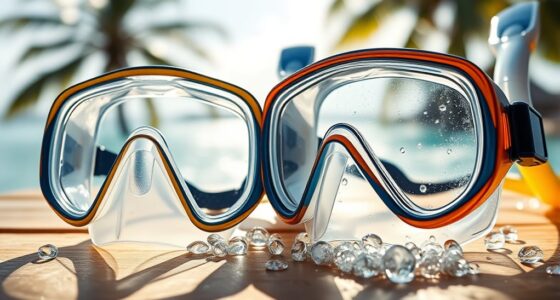
Inspect your snorkeling gear for wear and tear to safeguard your health and enhance your underwater experience.
Once you’ve completed your dive, it’s time to clean your gear thoroughly. Rinse it in fresh water immediately after use to remove salt, sand, and other debris. This step is vital for maintaining the integrity of your equipment and preventing the growth of harmful bacteria. After rinsing, use a mild soap formulated for diving gear to scrub each piece. Pay special attention to areas that come into contact with your skin, like the inside of your mask and the mouthpiece of your snorkel.
Disinfection doesn’t stop with washing. After cleaning, you should disinfect your gear using a solution that’s safe for marine life. A diluted mixture of white vinegar or a commercial disinfectant designed for diving gear can effectively eliminate harmful pathogens. Allow your gear to soak in the solution for the recommended time before rinsing it again with fresh water. This extra step not only helps in infection prevention but also extends the lifespan of your equipment, particularly if you incorporate cozy textiles to ensure comfort during your underwater adventures.
Finally, let your gear dry completely before storing it. Storing damp equipment can lead to mold and mildew, which can compromise your health during your next dive. Hang your wetsuit and store your mask and snorkel in a well-ventilated area, away from direct sunlight to avoid damage.
Frequently Asked Questions
How Often Should I Disinfect My Snorkeling Gear?
You should disinfect your snorkeling gear after every use, especially if you’ve been in crowded areas or freshwater. Regular gear maintenance is essential for prolonging the life of your equipment. Make sure you check the disinfectant compatibility with your gear materials to avoid damage. By keeping your gear clean, you enhance your safety and performance during your next adventure. Plus, it’ll help you enjoy the water without any worries!
What Disinfectants Are Safe for Silicone Masks?
For silicone masks, you’ll want to use disinfectants that guarantee silicone compatibility and ensure disinfectant safety. Opt for mild solutions like diluted dish soap, vinegar, or specialized silicone-safe disinfectants. Avoid harsh chemicals like bleach or alcohol, as they can damage the silicone. Rinse thoroughly after disinfecting to keep your gear in top shape. By choosing the right products, you’ll maintain your mask’s integrity and enjoy a safer diving experience.
Can I Use Bleach to Disinfect My Gear?
You shouldn’t use bleach to disinfect your gear, as it can damage materials and reduce gear durability. Instead, opt for bleach alternatives like hydrogen peroxide or vinegar, which are safer and effective. These options help eliminate bacteria without harming your equipment. Remember to always rinse your gear thoroughly after using any disinfectant to ensure it stays in top shape for your next adventure. Taking care of your gear prolongs its lifespan and performance.
How Do I Store Disinfected Gear Properly?
To store your disinfected gear properly, think of it as tucking your equipment in for a cozy rest. First, make certain everything’s completely dry to prevent mold. Use a cool, dark place for storage, like a dedicated bag or box, and keep it away from direct sunlight. Regularly check your gear for any signs of wear, as part of your equipment maintenance routine. Following these storage tips helps extend the life of your beloved gear!
What Are Signs My Gear Needs Replacement Instead of Disinfecting?
If your gear shows signs of material deterioration, like cracking or peeling, it’s time for a replacement. You should also consider replacing your gear if persistent odors remain even after thorough cleaning. These signs indicate that the integrity of the materials has been compromised, which can affect your safety and comfort while diving. Don’t risk it; investing in new gear will ensure a better experience on your underwater adventures.
Conclusion
So, the next time you gear up for an underwater adventure, remember that a little disinfecting can go a long way. You might just be saving yourself from unwanted illnesses while keeping the ocean’s ecosystem healthy. Coincidentally, that extra care you put into cleaning your gear could lead to a smoother plunge and a more enjoyable experience. After all, who wouldn’t want to explore the vibrant underwater world without a worry? Immerse yourself with confidence!