Underwater navigation goes beyond just using a compass. You can rely on natural clues like Earth’s magnetic field, water temperature differences, and chemical signals to find your way. Marine animals like turtles and whales use these cues to migrate thousands of miles in featureless waters. By understanding and mimicking these natural signals, technology is evolving to improve underwater navigation. Keep exploring to discover how these biological insights are shaping future navigation tools.
Key Takeaways
- Earth’s magnetic field guides marine animals and can be used by sensors for navigation beyond traditional compasses.
- Water temperature gradients provide environmental cues that help determine position and direction in featureless underwater environments.
- Chemical signals serve as navigational markers, allowing detection of specific locations or migration routes.
- Water current analysis offers clues about movement, aiding in orientation and position tracking underwater.
- Biological navigation strategies inspire technological advancements in sensors and autonomous systems for natural, cue-based underwater navigation.

Underwater navigation is a critical skill for explorers, researchers, and divers alike, enabling them to move accurately through the complex and often uncharted depths of the ocean. While traditional tools like compasses and GPS are invaluable, they don’t always work below the surface. Instead, you rely on natural clues and innovative technology that mimic the skills of marine animals and leverage recent submarine technological advances. Understanding how marine animals migrate across vast ocean distances offers insight into navigation strategies that go beyond magnetic or visual cues. These creatures, such as whales, sea turtles, and sardines, navigate thousands of miles with remarkable precision, often using Earth’s magnetic field, water temperature gradients, and chemical signals. Observing their behavior reveals how they interpret subtle environmental cues to maintain orientation, even in featureless waters. As a diver or researcher, you can learn from these biological systems to improve your own navigation methods, especially in environments where traditional tools fall short.
In recent years, submarine technological advances have considerably enhanced underwater navigation capabilities. Sonar systems, inertial navigation devices, and underwater acoustic positioning systems allow you to detect obstacles, map terrains, and determine your position with high accuracy. These innovations are inspired by natural phenomena and biological systems, integrating principles observed in marine animal migration. For example, underwater drones and autonomous underwater vehicles (AUVs) now utilize sophisticated sensors that mimic the sensory organs of marine animals, enabling them to interpret environmental signals for orientation. Magnetic sensors detect Earth’s magnetic field much like migratory whales, helping these machines maintain course over long distances. Meanwhile, advancements in water current analysis and temperature profiling give you additional natural clues, allowing for more precise navigation in deep or featureless waters. Recognizing how biological navigation works can further inspire the development of new technologies and strategies for underwater exploration.

System Sensor M02-04-00 – Test Magnet Only
System Sensor M02-04-00
As an affiliate, we earn on qualifying purchases.
As an affiliate, we earn on qualifying purchases.
Frequently Asked Questions
How Do Marine Animals Find Their Way Without a Compass?
You might wonder how marine animals find their way without a compass. They rely on magnetic sensing to detect Earth’s magnetic field, helping them orient themselves. Additionally, they use visual landmarks like coral formations or the seabed to navigate. These natural clues work together, allowing marine animals to travel efficiently, find food, and migrate long distances without the need for a human-made compass.
Can Underwater Currents Affect Navigation Accuracy?
Underwater currents can definitely affect your navigation accuracy. Tidal influences create moving water patterns that can push you off course, making it harder to stay on your intended path. Additionally, magnetic anomalies disrupt Earth’s magnetic field, which some marine animals rely on for orientation. So, when currents shift or magnetic signals change, your navigation becomes less precise, requiring you to account for these natural clues to stay on track.
What Role Do Sound Waves Play in Underwater Navigation?
Sound waves play a vital role in underwater navigation through acoustic signaling and sonar technology. You can verify that sonar sends out sound pulses, which bounce off objects and return, helping you determine distances and locations. This method is especially valuable where visual cues are limited. By understanding and utilizing sound waves, you gain a reliable way to navigate accurately beneath the surface, even in dark or murky waters.
Are There Any Modern Devices That Mimic Natural Navigation Clues?
You’ll find modern navigation technology increasingly uses biomimicry applications that mimic natural clues. Devices like inertial navigation systems and advanced sonar emulate how marine animals, such as dolphins, navigate using echolocation and environmental cues. These innovations enhance underwater exploration by providing precise guidance without relying solely on traditional compasses. By studying natural navigation methods, engineers develop smarter, more reliable tools that improve safety and efficiency in challenging underwater environments.
How Do Divers Utilize Natural Cues for Orientation?
You use natural cues like visual landmarks and sediment patterns to stay oriented underwater. By observing distinctive coral formations, rocks, or wrecks, you can identify your location and direction. Sediment patterns, such as ripples or disturbed areas, help you determine current flow or movement. These cues work together to provide reliable navigation without relying solely on a compass, making your underwater experience safer and more intuitive.

Underwater Acoustic Positioning Systems
As an affiliate, we earn on qualifying purchases.
As an affiliate, we earn on qualifying purchases.
Conclusion
So, next time you think a compass is all you need underwater, remember nature’s hidden clues. While technology can guide you, it’s often the subtle currents, star patterns, and seabed features that truly lead the way. Ironically, in a world obsessed with gadgets, the oldest navigation tricks remain the most reliable. Trust those natural cues—they might just save you when your compass fails, proving that sometimes, the best way forward is to look beneath the surface.
Marine Sensor/Autonomous Underwater Vehicle Integration Project
As an affiliate, we earn on qualifying purchases.
As an affiliate, we earn on qualifying purchases.
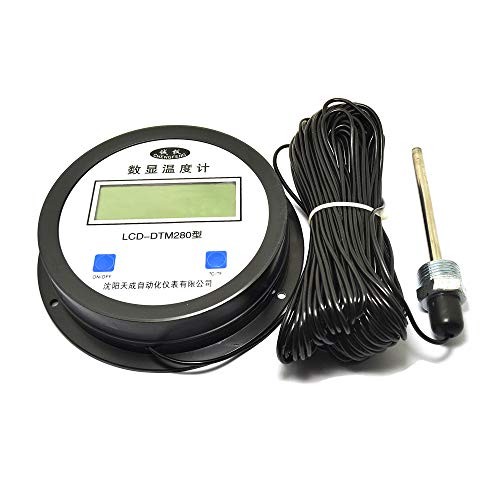
High Precision Digital Thermometer With Probe Electronic Digital Water Meter Temperature Measuring Instrument 30m Cable
Temperature range: -50 to +60 ° C,Working environment: 0-40 ° C (dial)
As an affiliate, we earn on qualifying purchases.
As an affiliate, we earn on qualifying purchases.