
Proper kayak rudder adjustments can make a world of difference in your steering control. Start by checking the rudder’s alignment behind your kayak, ensuring it’s straight and perpendicular to the water. Tweak the cable tension—if it’s too loose, steering will feel sluggish; too tight can wear out cables. Test your adjustments until the steering feels natural. With the right setup, you’ll paddle effortlessly and enjoy your time on the water even more. Discover how to refine that process further.
Key Takeaways
- Ensure the rudder is aligned straight behind the kayak to prevent veering and improve steering efficiency.
- Adjust steering sensitivity by modifying cable tension to achieve a responsive and comfortable paddling experience.
- Regularly check rudder alignment for optimal performance; misalignment can lead to increased effort and frustration.
- Fine-tune rudder cable tension: loose cables slow response, while overly tight cables can cause wear.
- Conduct test runs after adjustments to ensure the kayak responds well to steering inputs and feels natural.
When you’re out on the water, having your kayak rudder properly adjusted can make all the difference in your paddling experience. If your rudder alignment isn’t just right, you might find yourself fighting against the current or struggling to maintain a straight course. This can lead to frustration and fatigue, taking away from the joy of exploring your favorite waterways. Getting your rudder set up correctly is vital for smooth steering and overall efficiency.
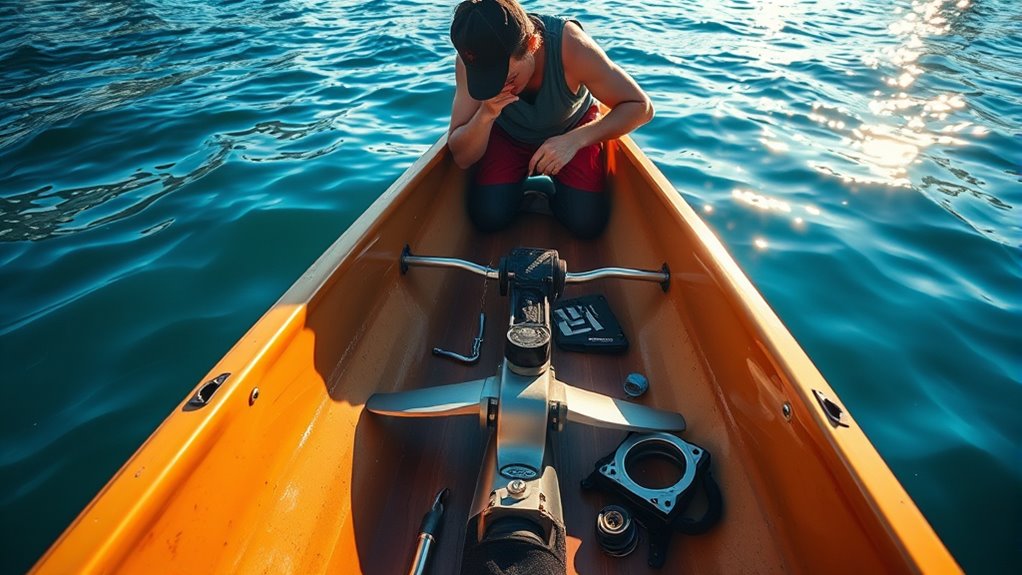
First, you’ll want to check the rudder alignment. Make sure it’s positioned straight behind your kayak when you’re paddling. If the rudder’s not aligned properly, it can cause your kayak to veer off course, requiring extra effort to keep it on a straight path. To assess alignment, take a moment to look back at your rudder while you’re on calm water. Ensure it’s perpendicular to the surface of the water. If it seems off, you’ll need to make adjustments.
Next, consider the steering sensitivity of your rudder system. This refers to how responsive the rudder is to your inputs. If you find that it’s too sensitive, even a slight touch can send your kayak veering off in unexpected directions. Alternatively, if it’s not sensitive enough, you may have to overcorrect, which can lead to strain on your arms and back. Finding that sweet spot is essential for a comfortable ride.
To adjust steering sensitivity, start by adjusting the tension on the rudder cables. If they’re too loose, your rudder will respond sluggishly, making it difficult to steer. Tightening them can enhance responsiveness but be careful not to overdo it; too tight can cause wear and tear on the cables. Experiment with small adjustments until you find the right balance that feels comfortable for you.
Finally, practice makes perfect. Once you’ve made your adjustments, take your kayak out for a test run. Pay attention to how the kayak responds as you steer. It’s all about finding what works best for you, as everyone has different preferences. With the right rudder alignment and steering sensitivity, you’ll glide effortlessly across the water, making your paddling adventures all the more enjoyable. Remember that proper adjustments to your equipment can significantly enhance your overall experience. So, take the time to adjust your rudder, and you’ll see the benefits on your next outing.
Frequently Asked Questions
How Often Should I Check My Kayak’s Rudder System?
You should check your kayak’s rudder system regularly, ideally before each outing. Make it a habit to inspect the hinge for any wear or damage, ensuring it operates smoothly. Don’t forget about rudder lubrication; applying it prevents sticking and helps maintain performance. If you notice any issues during your inspection, address them promptly to avoid steering problems while you’re out on the water. Keeping up with maintenance will enhance your kayaking experience.
Can I Install a Rudder on Any Kayak Model?
You can install a rudder on many kayak models, but rudder compatibility is vital. Check your kayak’s design and features to make certain it can accommodate a rudder system. Look for installation tips specific to your kayak type, as some may require additional hardware or modifications. If in doubt, consult your kayak’s manufacturer or a specialist to get the best advice for a successful installation that enhances your paddling experience.
What Materials Are Best for Rudder Maintenance?
Think of your rudder like a trusty smartphone—you want it to last! For best rudder maintenance, prioritize materials like stainless steel or high-quality plastic for durability. Guarantee maintenance material compatibility by using lubricants and cleaning agents that won’t degrade these materials. Regularly check for wear and tear, and replace any worn parts promptly. By selecting the right rudder materials and keeping up with maintenance, you’ll keep your steering smooth and reliable!
Is a Rudder Necessary for All Kayaking Conditions?
A rudder isn’t necessary for all kayaking conditions, but it can enhance your kayak’s maneuverability. In calm waters, you might find paddling sufficient, while in wind or currents, a rudder’s versatility helps you maintain direction. It allows for more precise steering, making it easier to navigate challenging conditions. If you’re planning to paddle in diverse environments, investing in a rudder can markedly improve your overall experience on the water.
How Do I Store My Kayak With a Rudder Attached?
To store your kayak with a rudder attached, hang it upside down or keep it on a flat surface. Make certain the rudder’s protected by placing padding around it or using a dedicated cover to prevent damage. If you’re storing it outdoors, shield it from sunlight and harsh weather to prolong its lifespan. Regularly check for any wear on the rudder during storage, so you’re ready for your next adventure.
Conclusion
By making the right rudder adjustments, you can effortlessly steer your kayak with confidence. As you glide over the water, a slight tweak here, a gentle pull there, and suddenly, your path straightens. It’s almost like the kayak knows what you want, responding to your every command. With practice, these small changes become second nature, and soon you’ll find yourself steering with ease. So, embrace those adjustments, and let the water guide you forward.