Eco-friendly snorkeling helps you enjoy coral reefs while protecting fragile marine ecosystems. Stick to designated paths and avoid touching corals to prevent damage. Use reef-safe sunscreen and biodegradable gear to minimize your environmental impact. Maintain a safe distance from marine life to respect their natural behaviors. Supporting sustainable brands contributes to conservation efforts. By adopting these practices, you can enhance your snorkeling experience and ensure the health of ocean habitats for the future. There’s plenty more to explore about this!
Key Takeaways
- Use reef-safe sunscreen to prevent coral bleaching and protect marine ecosystems from harmful chemicals.
- Stick to designated snorkeling paths to avoid damaging fragile coral reefs and their habitats.
- Choose biodegradable snorkeling gear to minimize your environmental footprint while enjoying marine life.
- Observe marine wildlife from a safe distance without disturbing their natural behaviors or habitats.
- Participate in local conservation programs and clean-up events to actively contribute to ocean health and awareness.
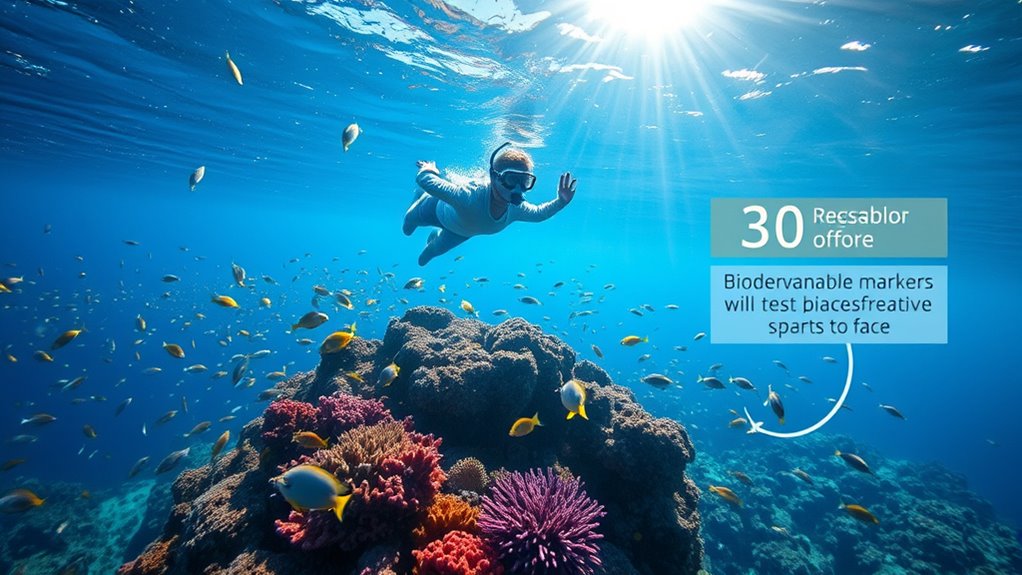
Have you ever wondered how your snorkeling adventures can leave a positive impact on the environment? When you explore the underwater world, you’ve got a unique opportunity to contribute to coral conservation and protect marine wildlife. Every time you slip into the ocean, you can choose to be a responsible snorkeler, ensuring that your activities don’t disrupt the delicate ecosystems beneath the waves.
First off, think about the corals. They’re not just beautiful structures; they’re crucial to the health of marine life. Coral reefs support about 25% of all marine species, acting as homes and nurseries for countless fish and other creatures. When you snorkel, you can help conserve these essential ecosystems by sticking to designated paths and avoiding touching or stepping on the corals. Remember, corals are fragile and can take years to recover from damage. By respecting their space, you’re doing your part to preserve these underwater wonders.
Corals are vital to marine health; protect them by snorkeling responsibly and respecting their delicate ecosystems.
While you’re in the water, keep an eye out for marine wildlife. You might spot colorful fish, sea turtles, or even the elusive octopus. Each of these creatures plays a significant role in the marine ecosystem. When you observe them, do so from a safe distance. Avoid chasing or feeding them, as this can alter their natural behaviors and put them at risk. Instead, enjoy the experience of watching them thrive in their natural habitat. This not only enriches your snorkeling adventure but also supports the well-being of the wildlife you’re observing.
Another way you can make a positive impact is by using eco-friendly snorkeling gear. Avoid products that contain harmful chemicals or materials that could damage the ocean. Opt for reef-safe sunscreen, as conventional sunscreens can contribute to coral bleaching. By choosing biodegradable options, you’re protecting both the corals and the marine life that depends on them.
Educating yourself about the local environment and its challenges can also enhance your snorkeling experience. Understanding the importance of coral conservation and the threats posed by pollution and climate change will make you a more mindful snorkeler. You can even engage with local organizations focused on marine conservation. By participating in clean-up events or conservation programs, you’ll not only deepen your connection to the ocean but also contribute to the preservation of its beauty for future generations. Additionally, recognizing how informed choices in your gear and practices can significantly reduce your environmental footprint is crucial for responsible snorkeling.
Frequently Asked Questions
What Gear Is Best for Eco-Friendly Snorkeling?
For eco-friendly snorkeling, opt for sustainable gear like snorkeling masks made from recycled materials and fins crafted from biodegradable equipment. These choices reduce your impact on marine life while ensuring a great experience. Look for wetsuits made from natural rubber that decompose over time. Always check for brands committed to environmental practices. By choosing wisely, you contribute to preserving the underwater world for future generations while enjoying your snorkeling adventures.
How Can I Identify Harmful Marine Species?
To identify harmful marine species, start by researching local marine life before your snorkeling trip. Familiarize yourself with common harmful marine life, like jellyfish and lionfish, using identification guides or apps. Pay attention to their colors, shapes, and behaviors. While snorkeling, observe your surroundings carefully and avoid touching any unfamiliar creatures. If you’re unsure about a marine species, it’s best to steer clear and prioritize your safety in the water.
Are There Eco-Friendly Snorkeling Tours Available?
Yes, there are eco-friendly snorkeling tours available that prioritize marine protection and promote eco-tourism. Imagine gliding through crystal-clear waters, knowing your adventure supports sustainable practices. These tours often use small groups to minimize impact, educate you about local ecosystems, and encourage responsible snorkeling. By choosing one of these tours, you’re not just enjoying the beauty of the ocean; you’re also playing a part in preserving it for future generations.
Can I Snorkel Without Harming Coral Reefs?
Yes, you can snorkel without harming coral reefs. To guarantee coral preservation, always stick to designated paths and avoid touching or standing on the reefs. Use reef-safe sunscreen to protect marine life and choose equipment that minimizes your impact. Educate yourself about marine safety and respect local guidelines. By snorkeling responsibly, you help maintain the beauty of underwater ecosystems while enjoying the wonders of the ocean. Your actions can make a difference!
What Are Some Common Eco-Friendly Snorkeling Practices?
You can adopt several eco-friendly snorkeling practices to help with coral preservation and marine wildlife protection. Always use reef-safe sunscreen to minimize chemical damage. Avoid touching or standing on coral reefs, as this can cause harm. If you’re using gear, guarantee it’s eco-friendly and well-maintained. Respect wildlife by observing from a distance, and never feed the fish. By following these practices, you’ll enjoy snorkeling while protecting the delicate marine ecosystem.
Conclusion
By choosing eco-friendly snorkeling practices, you’re not just enjoying the underwater wonders; you’re becoming a superhero for the ocean! Every small action—like using reef-safe sunscreen or avoiding single-use plastics—creates waves of positive change. Seriously, you could be the reason a coral reef thrives or a sea turtle swims with joy. So, gear up, plunge in, and let’s make a splash that echoes through the deep blue, preserving this magical world for generations to come!