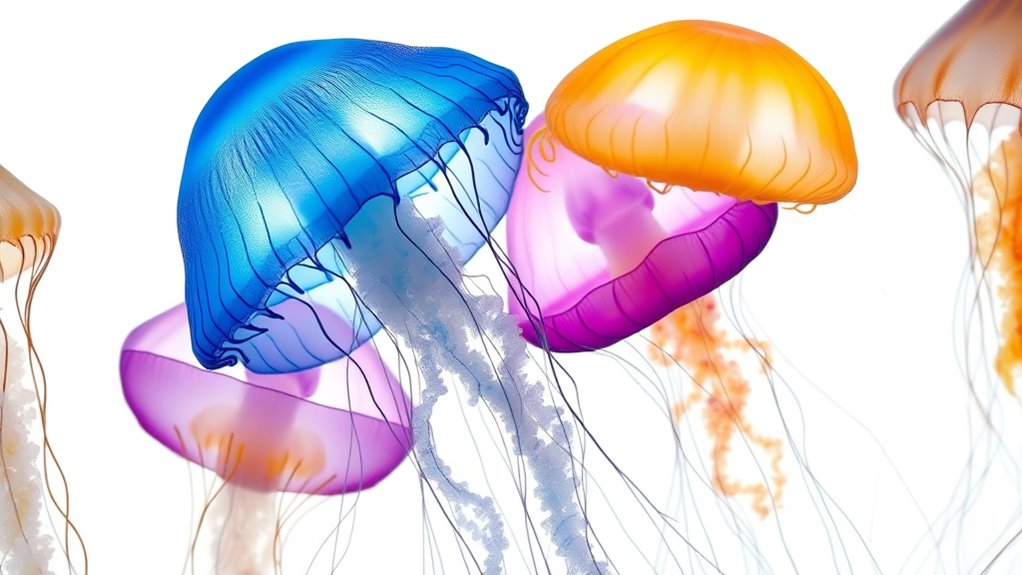

To identify dangerous jellyfish, pay attention to their colors. Bright hues like neon blue, purple, or pink often warn of toxicity, signaling you should stay cautious. Transparent or pale jellyfish tend to be less harmful, but some dangerous species can also look simple. Since color alone isn’t foolproof, combining this with habitat and season clues helps better assess risks. Stay alert—by understanding these color cues, you’ll know what to watch out for as you explore.
Key Takeaways
- Bright, neon colors like blue, purple, or pink often indicate more toxic, venomous jellyfish species.
- Transparent or pale jellyfish are generally less dangerous, but exceptions exist; caution is still advised.
- Habitat location (coastal shallow vs. deep cold waters) influences jellyfish color and potential threat level.
- Seasonal migration affects jellyfish appearance, with vivid colors more common during certain times, signaling possible increased danger.
- Recognizing specific color patterns helps identify potentially hazardous jellyfish and assess risks during encounters.
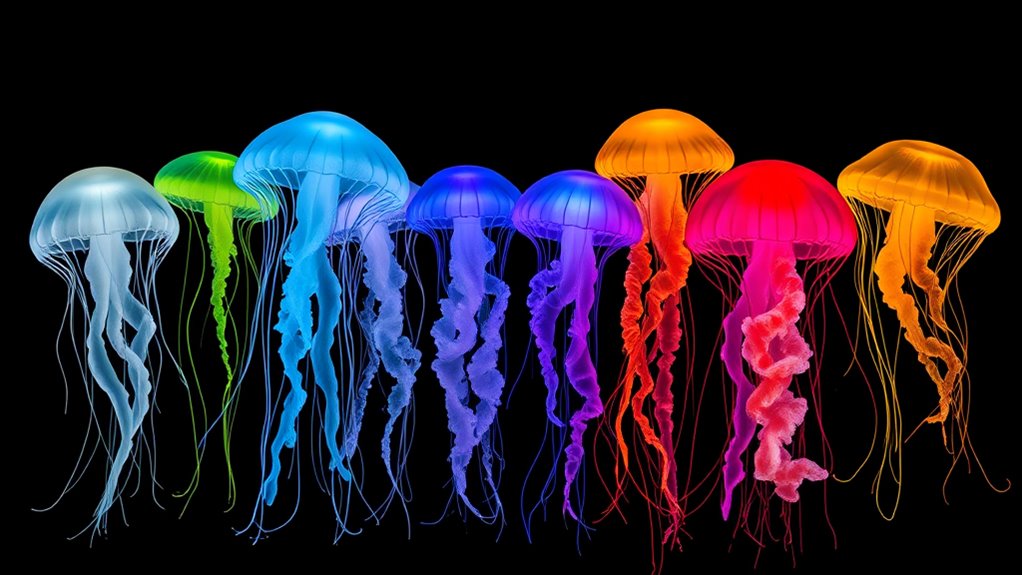
Have you ever wondered if the color of a jellyfish can reveal how dangerous it is? The truth is, while color can offer some clues, it’s not the only factor to consider. Jellyfish habitat plays a significant role in their appearance and potential danger. These creatures are often found in coastal waters, but some species prefer deeper or colder regions. Knowing where they live helps you anticipate which colors you might encounter. For example, bright, vibrant jellyfish are commonly seen in shallow, sunlit waters, while more muted tones tend to appear in the depths.
Jellyfish migration patterns also influence their coloration. During certain times of the year, some species migrate closer to shore, often changing in appearance due to environmental factors or life cycle stages. You might notice a jellyfish with a translucent or pale hue during one season and a more vivid or darker shade in another. This fluctuation can be linked to their feeding habits, reproductive cycle, or even water temperature. Being aware of these patterns helps you understand which jellyfish are likely to be more aggressive or venomous during specific periods. Additionally, water temperature can directly impact their coloration and activity levels.
Color can sometimes serve as a warning sign. For instance, some jellyfish display bright colors like neon blue, purple, or pink, which may signal toxicity. These hues act as visual cues for predators and humans alike—indicating that touching or handling them could be dangerous. Conversely, nearly transparent or pale-colored jellyfish are often less harmful, although exceptions exist. It’s vital to remember that appearance alone isn’t a foolproof way to determine danger. Some venomous species are quite subtle in color, and others with striking colors might not pose a significant threat.
Understanding the habitat and migration patterns of jellyfish gives you an extra layer of insight into their potential danger levels. If you’re swimming in regions known for certain jellyfish species, recognizing their typical colors and seasonal appearances can help you stay cautious. During migration periods, when jellyfish tend to congregate in shallower waters, you’re more likely to encounter colorful, potentially hazardous types. Being aware of these patterns allows you to exercise better judgment and avoid risky encounters.

H128 Handheld Thermal Camera, 240 x 240 TISR Resolution, 24h Battery Life Thermal Imaging Camera, 25 Hz Infrared Camera with Temperature Alarm, -4℉~ 842℉ Temp Range, IP65 Protection Level
Enhanced Clarity with 240x240 TISR Resolution: Equipped with TISR technology, the H128 infrared camera elevates your thermal imaging...
As an affiliate, we earn on qualifying purchases.
Frequently Asked Questions
Are All Brightly Colored Jellyfish Dangerous?
Not all brightly colored jellyfish are dangerous, but their vivid color patterns often serve as warning signs to stay cautious. Bright colors can indicate venomous species, yet some harmless jellyfish also display striking hues. You should always pay attention to these warning signs and avoid touching unfamiliar jellyfish. Recognizing the difference helps you stay safe while exploring the ocean, ensuring you don’t mistake a harmless creature for a harmful one.
How Can I Safely Identify Jellyfish in the Wild?
Sure, because wandering into jellyfish habitats is totally on your to-do list, right? The trick to safely spotting them is to learn their migration patterns and look for warning signs like tentacle clusters or bright colors. Avoid swimming in known jellyfish habitats during peak migration seasons. Remember, they can drift into areas unexpectedly, so stay alert and respect their space—being cautious beats getting stung by a surprise visitor!
Do Jellyfish Colors Change With Age or Environment?
Jellyfish color variation can happen due to age or environmental color changes. As they grow, their colors might shift slightly, but these changes are usually subtle. Environmental factors like water temperature, light, and plankton presence also influence their appearance, causing temporary color changes. So, you should be cautious, because relying solely on color for identification isn’t foolproof. Always consider other features and local knowledge when evaluating jellyfish safety.
What Should I Do if Stung by a Jellyfish?
If you get stung by a jellyfish, act quickly with first aid tips and emergency treatment. Rinse the sting area with vinegar or saltwater to neutralize the stingers, then carefully remove any tentacles using tweezers or a glove. Avoid rubbing the area, and take pain relievers if needed. Seek medical help if you experience severe pain, difficulty breathing, or allergic reactions. Prompt action helps reduce complications.
Are There Any Non-Toxic Jellyfish Species That Look Dangerous?
You might wonder if harmless jellyfish mimic dangerous ones through mimicry or resemble dangerous species with their appearance. Many harmless lookalikes have evolved to mimic dangerous jellyfish, making them harder for predators to identify. These non-toxic jellyfish often display similar colors and shapes, tricking predators into avoiding them. Recognizing these harmless lookalikes helps you stay safe, but always exercise caution, as visual cues alone might not guarantee safety.
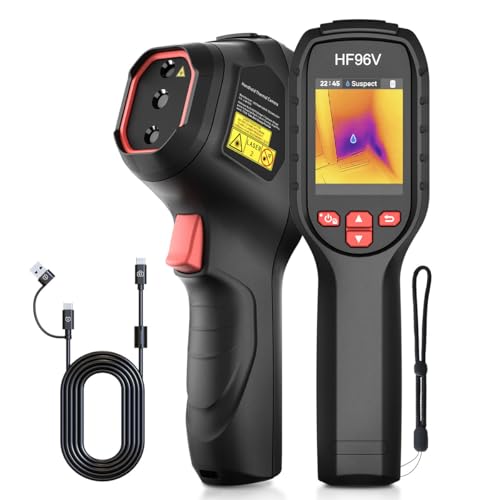
HF96V Thermal Camera with Visual Camera & Laser Pointer, Intelligent Scene Detection, 240 * 240 Super Resolution Thermal Imaging Camera,25 Hz, 50° FOV, -4°F to 1022°F, IP54 Infrared Camera
【Dual Cameras】Built-in 96x96 IR camera and 640x480 visible camera, the HF96V thermal imager offers 3 image modes (Fusion/Thermal/Visual)...
As an affiliate, we earn on qualifying purchases.
Conclusion
As you explore the ocean’s vibrant palette, remember that those striking jellyfish colors might just be a coincidence—your quick identification could save you from a painful sting. Keep the color chart handy, and stay alert whenever you spot these mesmerizing creatures. Sometimes, the most beautiful patterns hide the greatest dangers. So, enjoy your beach adventures, but trust your eyes and instincts—they might be the coincidence that keeps you safe and adds a little thrill to your day.

MILESEEY TR10 Thermal Imaging Camera,Super Resolution 192 x 192 Thermal Camera,25 Hz Refresh Rate, -4°F to 1022°F Handheld Infrared Imager,8-Hour Battery Life Infrared Camera
【High Definition Thermal Imaging】The MILESEEY TR10 delivers enhanced 192×192 thermal clarity infrared sensor. Its 25Hz high refresh rate...
As an affiliate, we earn on qualifying purchases.

TOPDON TC002C Duo Thermal Camera, Compatible with Any USB-C iPhone, iPad & Android Device, 512 x 384 Super Resolution, 256 x 192 IR Resolution Thermal Imager, -4°F~1022°F Temp Range -Grey
UNIVERSAL USB-C COMPATIBILITY: As an upgraded version of TC002C, the TOPDON TC002C Duo now works seamlessly with all...
As an affiliate, we earn on qualifying purchases.