To get up on the wakeboard, lie back in the water with your knees pulled to your chest. As the boat starts slowly, extend your legs with bent knees. Let the boat pull you up instead of yanking yourself. Lean back slightly as you rise and keep your arms straight for balance. Shift your weight gently from heel to toe after standing. Keep practicing to improve your skills, and you’ll discover more essential tips along the way!
Key Takeaways
- Start by lying back in the water with your knees pulled to your chest for stability.
- Let the boat pull you gently; avoid yanking yourself up to maintain balance.
- Extend your legs with bent knees as the boat begins to move forward.
- Lean back slightly and keep your arms straight to assist in rising and balance.
- Shift your weight gently from heel to toe once you’re standing to stay upright.
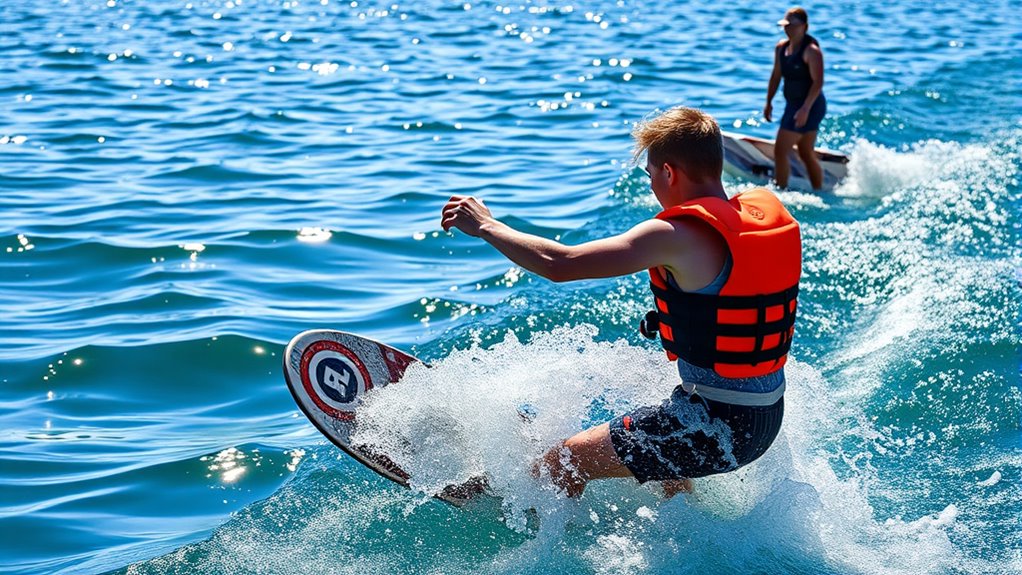
Have you ever dreamed of gliding across the water while catching the sun’s rays? If you’re ready to turn that dream into reality, wakeboarding might just be your ticket to fun and adventure. Getting up on the board for the first time can be a bit intimidating, but with the right mindset and preparation, you’ll be carving the waves in no time.
Before you even think about hitting the water, you need to prioritize water safety. Make sure you’re wearing a properly fitted life jacket. It’s not just a good idea; it’s essential. Familiarize yourself with the area where you’ll be riding. Look out for other boats and swimmers, and always be aware of your surroundings. It’s vital to communicate with your boat driver. A simple thumbs-up or thumbs-down can help verify you’re ready to go or need to stop.
Prioritize water safety: wear a life jacket, stay aware of your surroundings, and communicate with your boat driver.
Once you’ve got your safety gear sorted, it’s time to think about equipment maintenance. Your wakeboard and bindings should be in good condition before you hit the water. Check for any cracks or damages on the board, and ensure the bindings are secure. A well-maintained board will help you learn faster and keep you safe. If you’re renting equipment, don’t hesitate to ask the staff about its condition and any tips they might have for beginners. Additionally, understanding the importance of safety gear can significantly enhance your wakeboarding experience.
Now, let’s talk about getting up on the board. Start by lying back in the water with your knees pulled to your chest. When you’re ready, have your boat driver start slowly. As the boat begins to pull away, extend your legs while keeping your knees bent. The key here is to let the boat do the work. Don’t try to stand up too soon; instead, focus on keeping your balance.
As you feel the board start to rise out of the water, lean back slightly, and keep your arms straight. Let the rope pull you up rather than yanking yourself up. Once you’re standing, shift your weight gently from heel to toe to maintain balance.
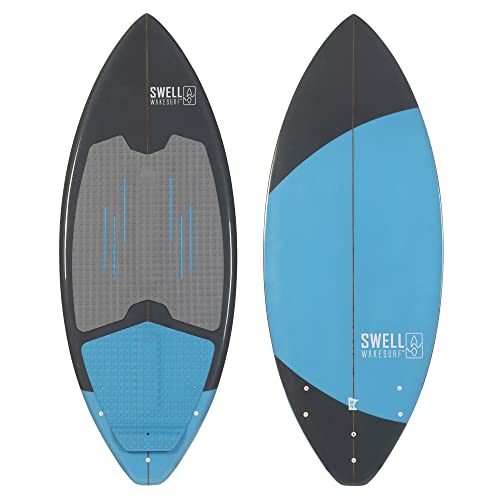
SWELL Wakesurf - Vermillion Skim Board (56)
BOARD STYLE: The Vermillion Skim Board is a skim style wakesurfer. Ideal for surface tricks like 360's, shuv-its,...
As an affiliate, we earn on qualifying purchases.
Frequently Asked Questions
What Type of Wakeboard Should I Buy as a Beginner?
As a beginner, you should look for a wakeboard made from a lightweight composite material, which offers durability and flexibility. Opt for a board with a continuous rocker for smoother rides. For binding style, choose open-toe bindings, as they provide a better fit and allow for growth in your skills. This combination will help you gain confidence on the water and make your learning experience much more enjoyable. Happy wakeboarding!
How Do I Choose the Right Size Wakeboard?
Choosing the right size wakeboard is like finding the perfect pair of shoes; it has to fit just right. Start by considering your weight and riding style to determine the board length. Generally, lighter riders opt for shorter boards, while heavier riders need longer ones. Don’t forget about boot size! Make sure your boots fit snugly on the board to maximize control and comfort. With the right fit, you’ll be carving through the water like a pro!
Is It Necessary to Wear a Life Jacket?
Yes, it’s vital to wear a life jacket when wakeboarding. Life jackets are a critical safety precaution that enhances water safety. They provide buoyancy, helping you stay afloat in case you fall or get tired. You should always choose a properly fitting jacket for maximum comfort and effectiveness. By prioritizing safety measures like this, you can enjoy your time on the water while minimizing risks. So, make sure you’ve got your life jacket on!
Can I Learn Wakeboarding Without Prior Experience?
Absolutely, you can learn wakeboarding without prior experience! As long as you’ve got basic swimming ability, you’ll be fine. Many beginners start with water skiing to build confidence and balance, which can help you changeover to wakeboarding more smoothly. Just remember, it might take a few tries to get up on the board, but with practice and the right guidance, you’ll be riding the waves in no time!
What Are the Best Conditions for Beginners to Wakeboard?
The best conditions for you to wakeboard as a beginner include warm water temperatures and calm wind conditions. Ideally, aim for water that’s around 70°F or higher, as it feels more comfortable if you fall in. Look for days with light winds or a flat lake surface; this makes it easier to get up on the board and maintain balance. Enjoying these favorable conditions will boost your confidence and enhance your learning experience!

Ronix Koal Classic Fish Wakesurf Board for All Levels | Versatile Forgiving Surf-Style Board with Tool-Free Fin-S System & Swallowtail | Best for Recreational Wakesurfing, Glossy Black/Bamboo, 5'
SURF-STYLE PERFORMANCE FOR ALL LEVELS - The Ronix Koal Classic Fish Wakesurfing Board is designed as a true...
As an affiliate, we earn on qualifying purchases.
Conclusion
As you glide across the water, remember that getting up on the board is just like tackling life’s challenges. The first time you fell, it felt like a wipeout, but with each attempt, you grew stronger. Just like a seed breaking through the soil, your perseverance will help you rise. So, embrace the splashes and keep pushing forward—soon you’ll be carving turns and catching air, proving that with patience, you can conquer anything.
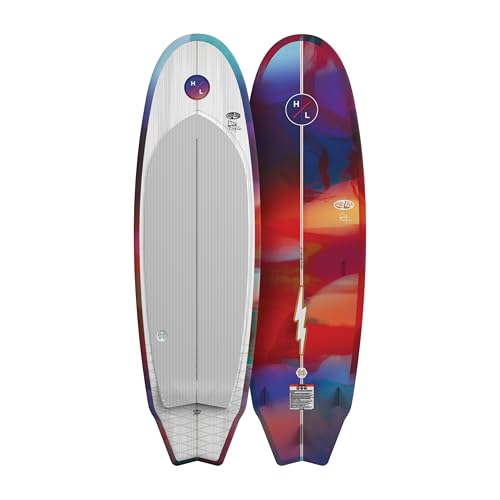
Hyperlite Landlock Longboard-Inspired Wake Surf Board - for Beginners to Intermediate Riders - Catching All Waves Behind The Boat - 5’9”
BEGINNER-FRIENDLY RIDE: Designed for first-time riders, bigger surfers, or relaxed sessions, this longboard-inspired wakesurf board incorporates Hyperlite’s rounded...
As an affiliate, we earn on qualifying purchases.

Airhead Bonzai Surf-Style Wakesurf Board
Compression molded fiberglass board with dual hook grooves
As an affiliate, we earn on qualifying purchases.