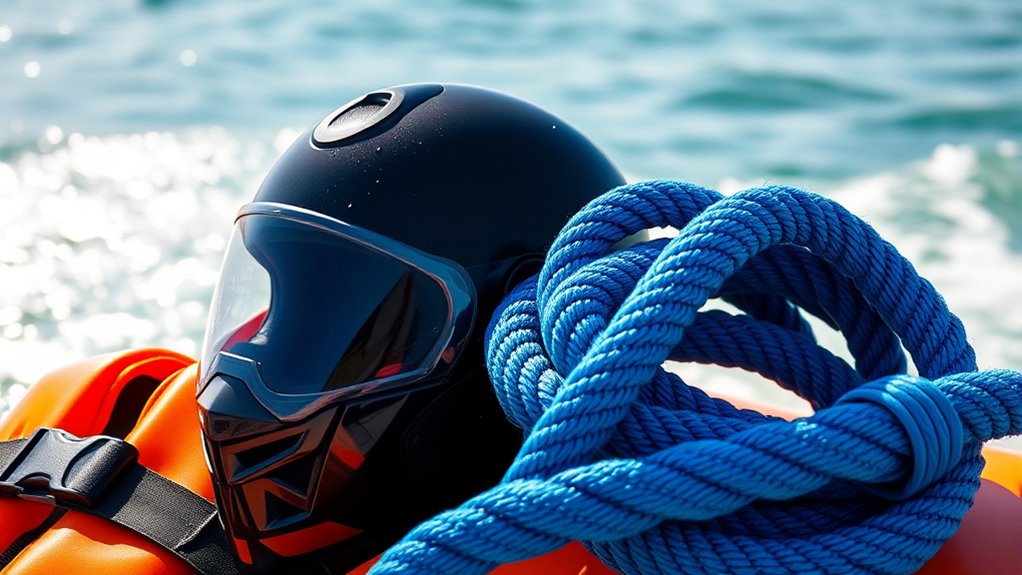

When it comes to safety gear for wakeboarding, you can’t overlook helmets, life vests, and ropes. Helmets cushion your head during falls, while life vests provide essential buoyancy and freedom of movement. Choose ropes that match your wakeboarding style and guarantee bindings are secure but comfortable. Regularly inspect all gear for wear and tear to keep accidents at bay. There’s a lot more to know about how these elements enhance your safety and enjoyment on the water.
Key Takeaways
- Helmets provide essential head protection and should fit snugly to ensure safety during falls or catches.
- Life vests offer crucial buoyancy and freedom of movement; proper fit prevents restriction and ensures safety.
- Ropes and bindings are vital for control; using the right equipment minimizes risks and enhances performance.
- Regularly inspect all gear for damage to prevent accidents and ensure optimal safety during wakeboarding.
- Stay aware of water conditions and communicate effectively with others to maintain a safe wakeboarding environment.
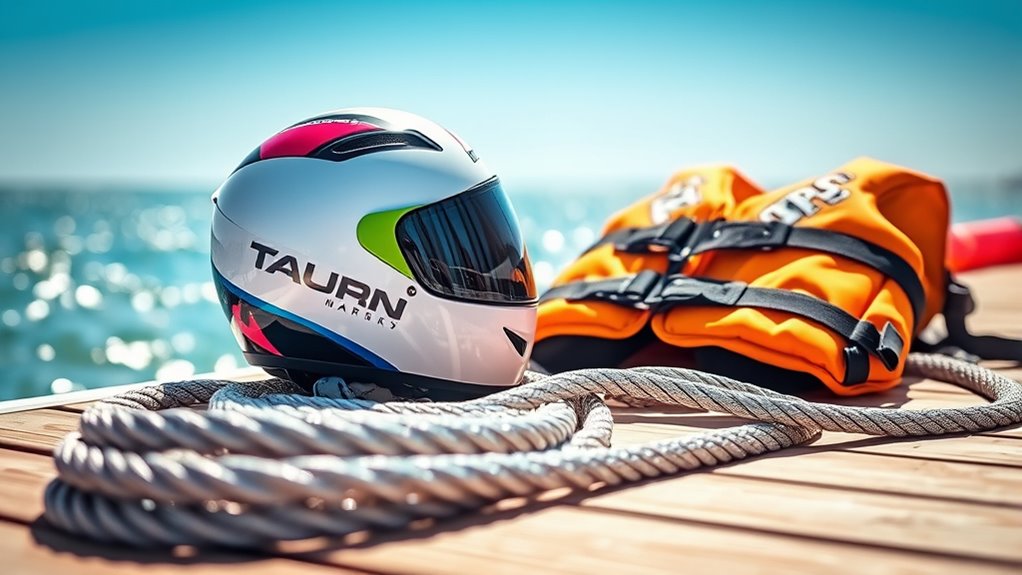
When you hit the water for wakeboarding, guaranteeing your safety should be your top priority. One of the best ways to protect yourself is by wearing the right safety gear. A good helmet is indispensable for safeguarding your head against potential impacts. Although you might think it’s just for show, it can truly make a difference if you take a fall or catch an edge during a trick. Look for a helmet that fits snugly but comfortably. You want it to stay in place while you’re performing those thrilling water jump techniques, yet still feel light enough that it won’t distract you.
Next up is the life vest. A proper vest not only helps keep you afloat but also provides essential protection during sudden tumbles. Make sure to choose a vest that fits you well—too loose and it could ride up, too tight and it’ll restrict your movement. You’ll want one that allows for freedom of motion while still offering that critical buoyancy. Additionally, consider vests that have impact protection; these can absorb some of the shock from falls and help prevent injuries.
Don’t overlook the importance of ropes and bindings. A reliable rope is indispensable for maintaining control while you’re out on the water. Ensure your rope is rated for the type of wakeboarding you’re doing; using the wrong type can lead to dangerous situations. For bindings, you’ll want them to secure your feet properly without cutting off circulation. This will give you the confidence to execute those daring tricks, knowing that your feet are well anchored to the board.
Now, let’s talk about equipment maintenance. Regular checks on your gear can prevent accidents before they happen. Inspect your helmet for any cracks or wear and tear, as well as your life vest for signs of damage. Ropes can fray over time, so make sure you’re replacing them when necessary. Keeping your board in good condition is equally important; ensure there are no dents or damage that could affect your performance.
Finally, always be mindful of your surroundings while wakeboarding. Know the water conditions, be aware of other riders, and communicate with your boat driver. With the right safety gear and equipment maintenance in place, you’ll be ready to enjoy the ride while minimizing risks. So gear up, stay safe, and have a fantastic time on the water! Remember, participation in workshops and classes can further enhance your skills and safety awareness on the water.
Frequently Asked Questions
How Do I Choose the Right Helmet Size for Wakeboarding?
To choose the right helmet size for wakeboarding, start by measuring your head. Use a soft tape measure and wrap it around the widest part of your head, just above your eyebrows. Once you have your head measurement, consult the helmet manufacturer’s sizing chart to find your fit. A properly fitting helmet should feel snug but comfortable, without pinching or moving around when you shake your head. Always prioritize comfort and safety!
Can I Use a Regular Life Vest Instead of a Wakeboarding Vest?
You can’t really use a regular life vest instead of a wakeboarding vest. In fact, studies show that over 70% of water sports injuries happen because of improper gear. Life vest alternatives, like wakeboarding vests, are designed for mobility and impact resistance, giving you the necessary protection while allowing freedom of movement. When you make a safety gear comparison, you’ll see that wakeboarding vests better meet the demands of the sport.
What Materials Are Best for Wakeboarding Ropes?
For wakeboarding ropes, you want materials that provide both durability and elasticity. Look for ropes made from high-quality polyethylene or nylon, as they offer great strength and flexibility. These materials resist abrasion and wear, ensuring your rope lasts longer. Additionally, a good wakeboarding rope should have some elasticity to absorb shocks from jumps and landings, giving you a smoother ride. Choose wisely, and you’ll enhance your wakeboarding experience considerably.
How Often Should I Replace My Wakeboarding Safety Gear?
You should replace your wakeboarding safety gear every two to three years, or sooner if you notice wear and tear. Curiously, studies show that 70% of injuries occur due to faulty equipment. Regular gear maintenance ensures your gear remains safe and effective. Always check for safety certification on your equipment; if it’s outdated or damaged, it’s time for an upgrade. Staying proactive about your gear keeps you safe on the water.
Are There Specific Safety Regulations for Wakeboarding Gear?
Yes, there are specific safety regulations for wakeboarding gear you should know about. Regulatory standards vary by region, but most require that your gear meets certain safety certifications. These certifications ensure that your helmet, vest, and ropes are designed to protect you effectively. Always check local guidelines and make sure your equipment complies with these standards, as this can markedly enhance your safety while enjoying wakeboarding. Stay informed and gear up wisely!
Conclusion
In summary, investing in the right safety gear for wakeboarding—like helmets, vests, and ropes—can make all the difference in your experience. Did you know that wearing a life vest can reduce the risk of drowning by up to 88%? By prioritizing safety, you not only protect yourself but also enhance your enjoyment on the water. So gear up, stay safe, and have a blast while riding those waves!