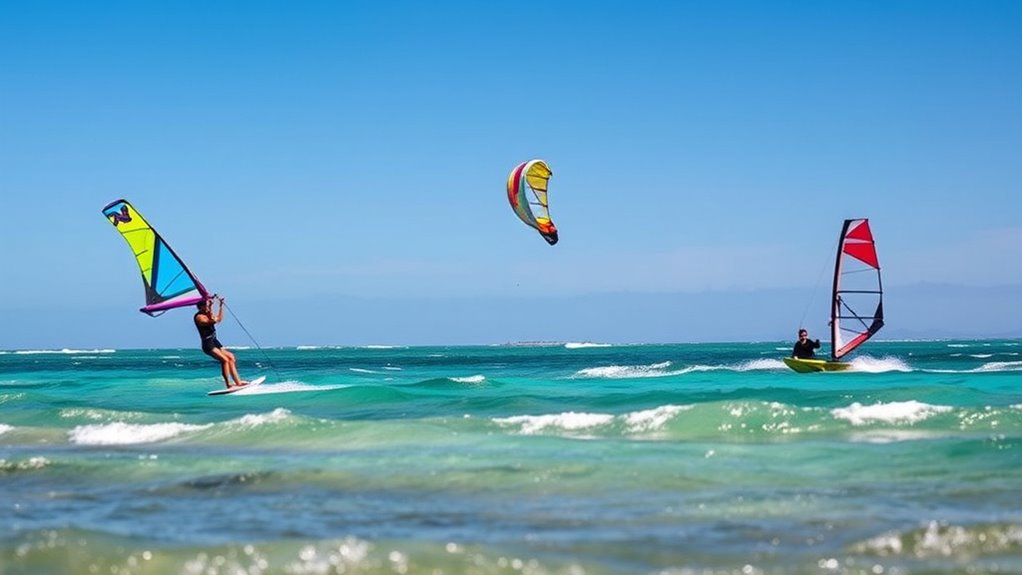

When comparing wingfoiling, kitefoiling, and windsurfing, each sport offers something unique for water sports enthusiasts. Wingfoiling is about lightweight gliding and portability, kitefoiling lifts you above the water with powerful kites, while windsurfing combines wind and board control. Each sport has a different learning curve and safety considerations. With advancements in gear, you can find something that matches your skill level and adventure goals. Find out how to choose the right sport for you next.
Key Takeaways
- Wingfoiling emphasizes portability and ease of use, making it more accessible for beginners compared to kitefoiling and windsurfing.
- Kitefoiling allows riders to experience high lifts above water using wind power but requires more skills in kite control.
- Windsurfing combines sail and board control, demanding mastery of both elements in varying wind conditions.
- Recent equipment innovations have enhanced user-friendliness across all three sports, benefiting both novices and experienced riders.
- Safety gear is essential in all sports, with specific considerations for kite control in kitefoiling and wind conditions in windsurfing.

As you explore the thrilling world of water sports, you might find yourself torn between wingfoiling, kitefoiling, and windsurfing. Each sport offers a unique experience, but they also come with their own sets of equipment and safety considerations that are essential to understand before diving in. Let’s break down what makes each of these sports captivating and how recent equipment innovations have changed the game.
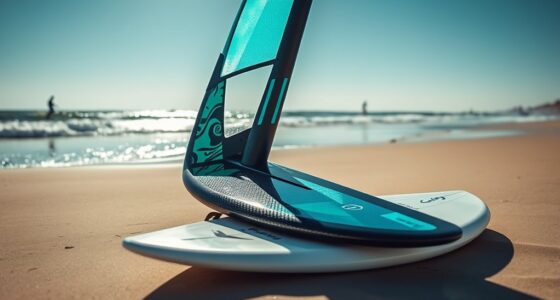
Wingfoiling is the newest addition to the water sports family. With its lightweight wing and hydrofoil setup, you can easily glide over the water with minimal wind. The innovation in wing design has made it more user-friendly, allowing beginners to pick it up quickly. You’ll appreciate how portable the gear is; you can pack it down and head to your favorite spot without the hassle of bulky equipment. However, it’s crucial to remember that while wingfoiling might seem simpler, safety should always be your priority. Always wear a life jacket and consider a helmet, especially when you’re starting out or in choppy waters.
Wingfoiling combines lightweight design with user-friendly innovation, making it an exciting and portable water sport for beginners. Prioritize safety with a life jacket and helmet!
Kitefoiling, on the other hand, brings a different thrill. The kite harnesses the wind power, lifting you above the water for a unique, exhilarating ride. Equipment innovation in kites has led to better stability and control, but that also means you’ll need to learn how to manage it effectively. Safety considerations come into play here, too; it’s essential to understand how to launch and land your kite safely. Wind conditions can change rapidly, so being aware of your surroundings is vital.
Windsurfing offers a blend of sailing and surfing. Its rig and board combo allows for a direct connection to the wind. Recent advancements in windsurfing gear, such as lighter boards and more responsive sails, make it easier to maneuver. However, windsurfing does come with its own set of safety concerns. You’ll need to be cautious about how the sail interacts with the water, especially in strong winds. Wearing a wetsuit can also protect you from cold water and potential falls.
Ultimately, each sport has its unique appeal and requires a thoughtful approach to equipment and safety. Generative AI has also begun to influence how enthusiasts learn and refine their skills, making it easier to access information and tutorials. Whether you lean towards the freedom of wingfoiling, the power of kitefoiling, or the dynamic experience of windsurfing, your choice should reflect your comfort level and enthusiasm for adventure. Remember to prioritize safety, stay educated about the equipment, and you’ll have an unforgettable time on the water.
Top picks for "compar wingfoil kitefoil"
Open Amazon search results for this keyword.
As an affiliate, we earn on qualifying purchases.
Frequently Asked Questions
What Are the Most Suitable Locations for Wingfoiling?
The most appropriate locations for wingfoiling are spots with good beach accessibility and favorable water temperature. Look for beaches with steady winds and flat, shallow waters, which make learning and practicing easier. Warm water is ideal, so coastal regions in summer or tropical destinations are perfect. Popular spots like Maui, California, or the Mediterranean provide ideal conditions, ensuring you enjoy your experience while staying safe and comfortable on the water.
How Do Weather Conditions Affect Each Sport’s Performance?
Weather conditions are like the canvas of your outdoor adventure, shaping every brushstroke of your experience. Wind speed variations greatly impact your performance; too little and you’re stagnant, too much can be overwhelming. Wind direction influences how effectively you harness that power. You’ll need to adjust your technique based on these factors to maximize your enjoyment and efficiency, ensuring every session feels like a masterpiece instead of a chaotic splash.
What Is the Average Cost of Equipment for Each Sport?
You can expect to spend around $1,500 to $3,000 for equipment in each sport, depending on brand and quality. For beginners, investing in good gear is essential, as it enhances your training experience. Remember, equipment maintenance plays a big role in performance, so factor in those costs too. You might need to replace or repair parts over time, so budgeting for upkeep is smart, especially during your learning phase.
Are There Specific Safety Gear Requirements for Wingfoiling?
Wingfoiling’s like sailing on the edge of a dream, but safety’s key. You’ll need protective clothing to shield against the elements and possible falls. A wetsuit or drysuit is a solid choice. Don’t forget your emergency gear, like a leash to keep your board close and a personal flotation device for added safety. Always check local regulations, too; they might require specific gear to keep you safe while you ride the waves.
How Do I Choose Between Wingfoiling, Kitefoiling, and Windsurfing?
To choose between wingfoiling, kitefoiling, and windsurfing, consider your interests and goals. If you enjoy training techniques that emphasize balance and control, wingfoiling might be your best fit. Kitefoiling offers thrilling speed and dynamic skill progression, while windsurfing provides a classic experience with solid fundamentals. Think about your preferred environment and the level of commitment you’re ready for, as each sport has its unique challenges and rewards.
Conclusion
So, whether you’re soaring above the water like a majestic albatross on your wingfoil, or getting tangled in your kite like a lost spaghetti noodle, remember: it’s all about the thrill. And let’s not forget the windsurfers, who seem to think they’re the elegant swans of the scene, gliding through life with their giant sails. At the end of the day, you’re just chasing wind and waves—so pick your poison and enjoy the ride!