
Choosing the right board volume and shape is key for your wingsurfing success. If you’re a beginner or heavier rider, opt for higher volume boards for stability and buoyancy. For experienced riders, lower volume boards enhance agility and speed. The board shape also matters; wider boards offer forgiveness, while narrower ones allow for sharper turns. Finding the perfect balance will improve your performance and confidence. Discover more tips and tricks for board selection to elevate your wingsurfing experience.
Key Takeaways
- Choose a board volume that matches your weight and skill level for optimal buoyancy and stability while wingsurfing.
- Wider board shapes provide better stability for beginners, while narrower shapes enhance speed and agility for experienced riders.
- Experiment with different rocker profiles to understand how board shape affects water handling and overall riding experience.
- Select fin sizes that correspond to your skill level: larger fins for stability and smaller fins for quicker, more responsive turns.
- Prioritize high-quality materials for durability, ensuring your board withstands rough conditions and maintains performance over time.
Choosing the right board for wingsurfing can make all the difference in your experience on the water. The board’s volume and shape play vital roles in your performance, stability, and overall enjoyment. When you’re out there, you want a board that feels just right beneath your feet, allowing you to maneuver effortlessly while maximizing your ride.
First, let’s talk about volume. It’s essential to choose a board that matches your weight and skill level. A higher volume board offers more buoyancy, making it easier to start gliding and staying afloat, especially for beginners or heavier riders. If you’re just starting, you’ll appreciate the stability that comes with a more voluminous board. On the other hand, experienced riders might prefer a lower volume board for increased maneuverability and speed. It’s all about finding that sweet spot that suits your style and ability.
Choosing the right board volume is crucial for stability and performance, especially for beginners or heavier riders.
Next, consider the shape of the board. The outline and rocker profile can critically affect how the board behaves in various conditions. A wider board will provide better stability and is more forgiving when you’re learning, while a narrower board can help you achieve higher speeds and sharper turns. Experiment with different shapes to see which one complements your riding style. You might find that a slight change in shape can enhance your experience dramatically.
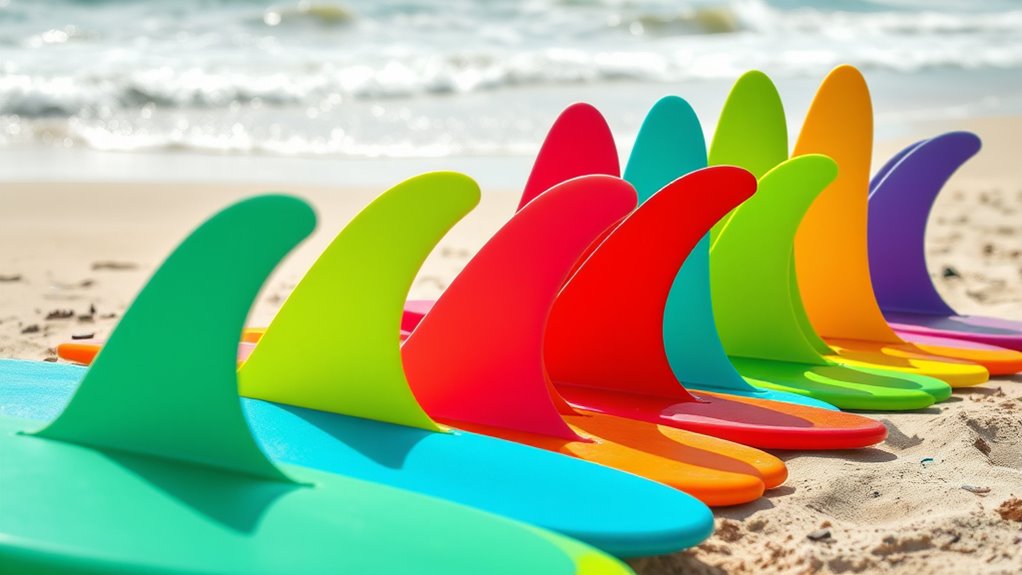
Fin design is another vital aspect of board selection. Fins help with grip and control, especially when you’re trying to carve through the water. Boards with larger fins tend to offer more traction, while smaller fins allow for quicker turns. Depending on your skill level and the conditions you’ll be riding in, it’s wise to choose a fin setup that enhances your performance and boosts your confidence.
Lastly, you must pay attention to material durability. Wingsurfing boards take a beating, and you want something that can withstand the elements. Look for boards made from high-quality materials that can handle rough waters and frequent use. A durable board will not only last longer but will also maintain its performance over time, giving you peace of mind while you focus on perfecting your skills. Additionally, camping resources can provide insights into gear maintenance and care, ensuring your equipment remains in top condition.
Frequently Asked Questions
What Is the Ideal Board Length for Beginners in Wingsurfing?
For beginners in wingsurfing, an ideal board length is around 6 to 8 feet. This size provides stability and easy maneuverability. You’ll want to contemplate board material; lightweight options are often easier to handle. Also, pay attention to fin configurations, as a three-fin setup can enhance your control. This combination helps you get comfortable on the water while allowing you to progress quickly in your wingsurfing skills.
How Does Weight Affect Board Volume Selection for Wingsurfing?
Your weight’s like a compass guiding your board volume selection in wingsurfing. Heavier riders typically need boards with more volume for better buoyancy and stability, while lighter ones can opt for less. This balance guarantees you float effectively and maneuver easily. When you choose your board, think of it as a vessel that must carry you smoothly over the water, adapting to your weight for an enjoyable ride.
Can I Use a Surfboard for Wingsurfing Instead of a Dedicated Board?
Yes, you can use a surfboard for wingsurfing, but surfboard compatibility varies. Beginners might find it more challenging due to less stability and volume compared to dedicated wingsurfing boards. Advanced riders may enjoy the versatility of a surfboard, as long as it suits their skill level. Keep in mind, a board designed specifically for wingsurfing will enhance your experience with better maneuverability and performance, especially when you’re starting out.
What Are the Best Brands for Wingsurfing Boards?
When you’re looking for the best brands for wingsurfing boards, check out Slingshot, Fanatic, and Duotone. These brands offer great options with durable board materials and innovative deck shapes to enhance your experience. Slingshot’s boards are known for their versatility, while Fanatic focuses on stability and performance. Duotone provides lightweight options that excel in various conditions. Consider your riding style and preferences when choosing the perfect board for your wingsurfing adventures!
How Often Should I Replace My Wingsurfing Board?
You should replace your wingsurfing board every few years, unless you enjoy riding a crumbling relic of your past. Regular board maintenance can extend its life, but let’s be real: if your board looks like it survived a shark attack, it’s time for a change! So, keep an eye on wear and tear. If you’re not feeling confident, don’t hesitate—go for a fresh board; it’ll be worth it in the long run!
Conclusion
In the world of wingsurfing, choosing the right board is like finding a trusted companion for your adventures. With the perfect volume and shape, you’ll glide effortlessly across the water, dancing with the wind and embracing the waves. Don’t just pick any board; select one that complements your style and enhances your experience. After all, every ride should feel like a gentle caress of freedom, inviting you to explore the beauty of the sea.