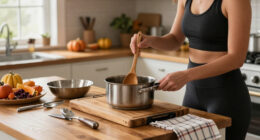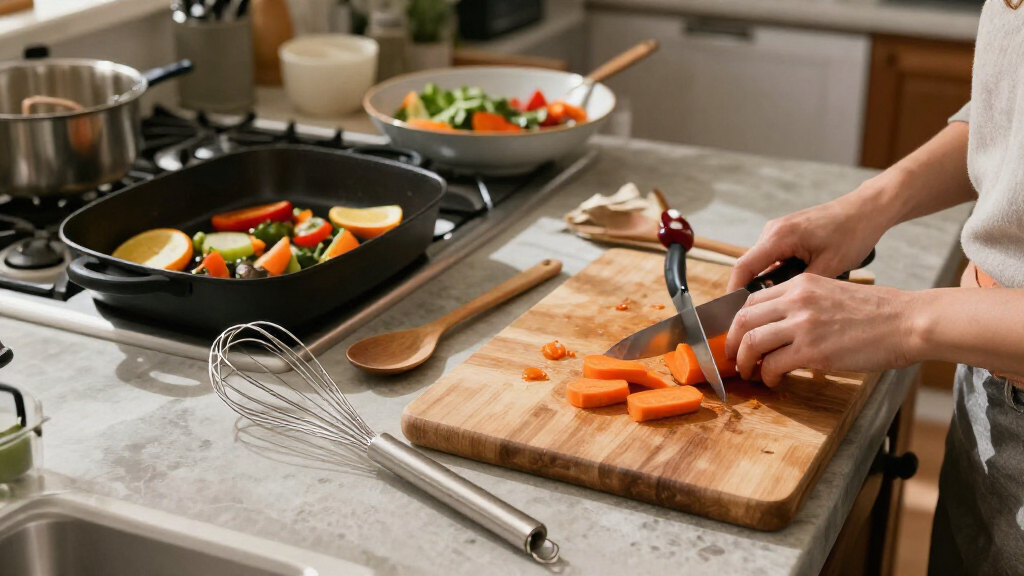

Use this guide to choose and set up the kitchen tools you need to prepare and serve a Thanksgiving meal. It is for first-time hosts and anyone cooking several dishes in a home kitchen. Allow 1–2 hours to check your menu, gather equipment, and make a workspace plan; cooking time depends on your dishes and oven capacity.

Get sports gear delivered free with Prime
- Fast, free delivery on millions of items
- Prime Video, Amazon Music and more included
- Member-only deals all year
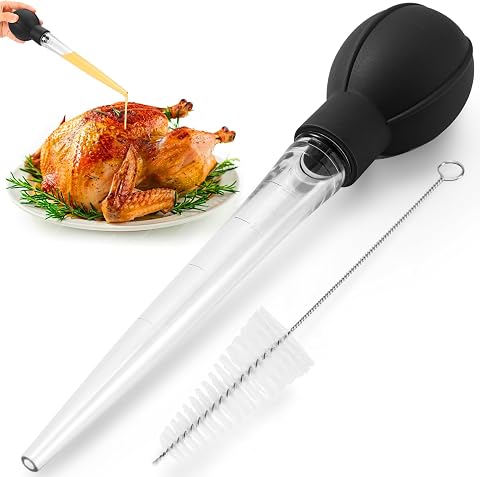
OLESBUR Turkey Baster with Cleaning Brush, Black
- ✔ Capacity: 28 ml (1 oz)
- ✔ Materials: Food-grade AS with silicone bulb
- ✔ Heat resistance: Up to 100°C (212°F)

30 ml Heat-Resistant Turkey Baster with Cleaning Brush
- ✔ Capacity: 30 ml (1 oz)
- ✔ Materials: Food-grade, heat-resistant AS with silicone bulb
- ✔ Maximum temperature: 100°C (212°F)

R&M Thankful Silicone Spatula with Beechwood Handle
- ✔ Length: 12 in
- ✔ Head material: Silicone
- ✔ Handle material: Beechwood
Difficulty: Beginner | Time: 1–2 hours to plan and organize; cooking time varies
What You’ll Need
Tools & Materials:
- Your final menu and recipes
- A pen and paper or a digital checklist
- Roasting pan and rack, if roasting a turkey
- Instant-read or probe thermometer
- Chef’s knife and cutting board
- Saucepans, skillets, and baking dishes matched to your recipes
- Sheet pans, mixing bowls, measuring cups, and measuring spoons
- Oven mitts, kitchen towels, and heat-safe trivets
- Serving spoons, carving knife, and serving platters
Knowledge:
- Basic recipe reading and kitchen safety
- How to check the capacity and settings of your oven
- How many guests you expect and what dishes you plan to serve
Check every recipe for its required pan size, appliance, and cooking temperature. Borrow or rent uncommon items before Thanksgiving week. Clear counter space and confirm that your refrigerator and oven can handle your planned food and cookware.
OLESBUR Turkey Baster with Cleaning Brush, Black
For the central Thanksgiving job of redistributing pan juices, the OLESBUR is the most balanced baster in this group. Its ml and oz measurement scales help us portion liquid or track a small amount of marinade, and the textured silicone bulb is intended to stay secure in hand during repeated squeezes. The included brush fits inside the suction tube for storage, addressing a practical cleanup nuisance: a narrow tube needs a tool that can reach its interior.Compared with the other 30 ml baster, OLESBUR gives up two milliliters of capacity, so it may need a few more pulls when collecting and spreading juices across a large bird. Its listed weight is also greater, though the supplied descriptions do not establish how that difference feels during use. Both models share the same stated 100°C (212°F) limit, dual markings, dishwasher-safe care, and stored brush. We rank OLESBUR first because its feature combination makes it a straightforward all-around choice for a host who wants a measured, cleanable baster. It remains a small-capacity tool, and the temperature rating means we should avoid assuming it can handle hotter liquids.
Pros:
- Dual ml and oz scales support portioning and repeatable transfers.
- Textured silicone bulb is designed for a secure grip.
- Dishwasher-safe construction simplifies cleanup after a busy meal.
- Cleaning brush stores inside the tube to keep the accessory with the baster.
Cons:
- The 28 ml capacity may require repeated filling for a large turkey or multiple servings.
- The stated maximum temperature is 100°C (212°F), limiting hotter-liquid use.
Best for: Hosts who want measured basting and sauce transfer in a dishwasher-safe baster with a dedicated tube-cleaning brush.
Not ideal for: Cooks who want to collect or dispense a large volume of liquid in fewer cycles, or need a tool rated above 100°C (212°F).
Bottom line: We recommend the OLESBUR for the clearest balance of measured basting, grip, and cleanup, provided its 28 ml capacity suits your workflow.
“We recommend the OLESBUR for the clearest balance of measured basting, grip, and cleanup, provided its 28 ml capacity suits your workflow.”
30 ml Heat-Resistant Turkey Baster with Cleaning Brush
This baster is a close match to the OLESBUR, but it shifts the emphasis slightly toward a lighter listed item and a touch more liquid per fill. At 30 ml capacity, it holds two milliliters more than our overall pick, a modest difference that could reduce refills across repeated basting passes. Its listed weight is 1.44 ounces, compared with 3.84 ounces for the OLESBUR, making it the lighter option on paper for cooks who expect to handle the tool often.We should keep that distinction in proportion: both are one-ounce-class basters, both carry ml and oz markings, both have a textured silicone bulb, and both include a brush that stores in the tube. They also share a 100°C (212°F) stated limit and dishwasher-safe care. The supplied details do not clarify any broader durability or ergonomic advantage, so the weight and capacity are the clearest reasons to choose this model. It works well as a simple, lighter baster for regular turkey prep, but cooks transferring larger amounts of stock or gravy may still prefer a ladle or measuring cup. Its slightly larger capacity does not turn it into a high-volume tool.
Pros:
- 30 ml capacity is slightly larger than the OLESBUR baster.
- Listed item weight is 1.44 ounces.
- Clear milliliter and ounce markings aid portioning.
- Includes a storable cleaning brush and is dishwasher-safe.
Cons:
- Its capacity is still small for moving large amounts of liquid.
- The maximum stated temperature is 100°C (212°F), the same limit as the OLESBUR.
Best for: Hosts who prefer a lighter baster with dual-unit markings and a slightly larger capacity than the OLESBUR model.
Not ideal for: Cooks seeking substantially fewer refills, a higher heat rating, or a tool that handles bulk sauce transfer.
Bottom line: Choose this baster over OLESBUR when its lighter listed weight and extra two milliliters matter more than the overall pick’s broader listed weight and feature balance.
“Choose this baster over OLESBUR when its lighter listed weight and extra two milliliters matter more than the overall pick’s broader listed weight and feature balance.”
R&M Thankful Silicone Spatula with Beechwood Handle
The R&M spatula covers a different part of Thanksgiving hosting from the two basters: it helps with batter, mashed ingredients, frosting, and scraping bowls or jars. Its flexible silicone head is suited to gathering mixtures from curved surfaces, while its stated compatibility with nonstick cookware makes it a useful choice for mixing or scraping without choosing a rigid metal utensil. The fall design gives it seasonal character, though the practical case rests on its range of prep jobs.Compared with either baster, this is the better pick for baking and bowl work, but it cannot collect and redistribute turkey drippings. Care is also less convenient: the natural beechwood handle calls for hand washing and thorough drying, while both basters are listed as dishwasher-safe. That tradeoff matters in a packed kitchen where we may want every tool to go through the same cleanup routine. At 12 inches, it offers a full-length handle for mixing and frosting, yet its 1.38-inch-wide head is a single spatula rather than a collection of specialty tools. We recommend it as a prep-side addition, especially for seasonal baking, rather than as the one tool to solve Thanksgiving’s hot-liquid tasks.
Pros:
- Flexible silicone head is designed to scrape bowls, pans, and jars.
- Suitable for use with nonstick cookware.
- Supports mixing, scraping, folding, and frosting.
- Beechwood handle provides a smooth natural grip.
Cons:
- Hand washing is recommended, unlike the dishwasher-safe basters.
- The beechwood handle should be dried thoroughly before storage.
Best for: Hosts who bake or prepare sides and want a flexible spatula for scraping, folding, mixing, and frosting.
Not ideal for: Anyone looking for a turkey baster, dishwasher-only utensil, or tool that needs little attention during storage.
Bottom line: Pick the R&M spatula for Thanksgiving baking and side-dish prep, while keeping a baster for turkey juices and sauce transfer.
“Pick the R&M spatula for Thanksgiving baking and side-dish prep, while keeping a baster for turkey juices and sauce transfer.”
As an Amazon Associate we earn from qualifying purchases.
Before You Start
Write down every dish, including appetizers, drinks, and desserts. Mark which items need the oven, stovetop, refrigerator, or a serving utensil. A tool can be shared between dishes only when their cooking or serving times do not overlap. Wash borrowed equipment and inspect handles, cords, and temperature probes before use.
Keep raw turkey and its juices separate from ready-to-eat food. Set out a dedicated cutting board and clean tools for raw poultry, and wash your hands and work surfaces after handling it.
Step-by-Step Instructions
Step 1: List the dishes and their equipment
Review each recipe and write down the equipment it calls for. Include pan dimensions, not just pan names: a recipe that specifies a 9-by-13-inch baking dish may not fit correctly in a smaller casserole. Add tools for preparation, cooking, temperature checks, serving, and cleanup. Include a carving knife and board if you plan to serve a whole turkey.
Tip: Check recipe notes for special items such as a food processor, pie weights, roasting rack, or gravy separator.
Check: Each menu item has a list of the pans, utensils, and appliances it needs.
Step 2: Check what you already have
Gather the listed tools in one place. Match cookware to the recipes and inspect each item for cracks, loose handles, damaged cords, or missing parts. Check that pans fit in your oven with enough room for air to circulate and that lids fit the pots you intend to use. Set aside anything damaged or incompatible.
Tip: Measure the inside of your oven and compare it with the widest baking dish. Account for the turkey pan as well as any racks you plan to use.
Check: You can identify every required tool and know which items are missing or unsuitable.
Step 3: Secure missing or specialty tools
Borrow, rent, or purchase only the items missing from your checklist. Prioritize a reliable food thermometer, suitable roasting pan, oven-safe baking dishes, and enough serving utensils. If borrowing, confirm the pickup and return dates. Try specialty equipment before cooking day so you can learn how it works and check that it fits your recipes.
Tip: If you lack a roasting rack, check whether your pan manufacturer allows a rack substitute, such as sturdy vegetables under the turkey. Keep the bird stable and follow a food-safe roasting method.
Check: Your equipment checklist is complete, and borrowed or new tools are available before preparation begins.
Step 4: Plan the oven and stovetop schedule
Write a cooking timeline beside your menu. Record each dish’s temperature, cooking time, and whether it needs resting time. Group dishes that can cook at the same temperature, and note where a temperature change is needed. Schedule stovetop dishes around the burners and pots available. Leave room for the turkey to rest before carving.
Tip: Do not assume every dish can share the oven at one temperature. Follow recipe directions, and use a thermometer to check food rather than relying on timing alone.
Check: The timeline shows which appliance each dish uses and where overlapping demands need to be resolved.
Step 5: Set up preparation tools and safe work areas
Place knives, cutting boards, peelers, measuring tools, mixing bowls, and colanders where you will prepare ingredients. Keep raw poultry equipment separate from tools for vegetables, bread, and cooked food. Put a stable cutting board on a damp towel to reduce slipping, and keep a clear area for hot pans.
Tip: Wash and dry equipment before the busy cooking period. Keep a clean towel for hands and another for wiping surfaces; replace either when soiled.
Check: You have a clear preparation area, separate raw-poultry tools, and space to handle hot cookware safely.
Step 6: Prepare serving and holding equipment
Choose a platter that can hold the turkey and serving plates or bowls for each side dish. Set out serving spoons, ladles, tongs, a carving knife, and a carving fork. Label each serving utensil with its dish if several look alike. Place trivets or heat-safe mats where hot dishes will land, and keep oven mitts within reach.
Tip: Check that the platter fits your table and refrigerator if you plan to chill leftovers on it. Avoid placing hot cookware directly on an unprotected surface.
Check: Every prepared dish has a suitable serving vessel and utensil, with safe landing space for hot pans.
Step 7: Test the thermometer and appliance fit
Read the thermometer instructions and check its battery or display. If it is an instant-read model, learn how to insert the probe into the thickest part of the food without touching bone. Confirm that the roasting pan and planned baking dishes fit in the oven, then arrange racks for the cooking schedule.
Tip: Use the temperature guidance from a trusted food-safety source or your recipe. A timer helps track cooking, but it does not confirm that poultry is safely cooked.
Check: The thermometer gives a reading, and the planned cookware fits without blocking the oven door or crowding the racks.
Step 8: Stage tools before cooking day
Put clean equipment together by task: preparation, oven cooking, stovetop cooking, and serving. Attach your equipment checklist to the menu timeline. Keep fragile or borrowed items in a protected spot, and leave frequently used tools accessible. On cooking day, return tools to their assigned area after washing so they do not disappear beneath dirty dishes.
Tip: Set aside a small tray for frequently used items such as measuring spoons, a timer, and instant-read thermometer.
Check: You can follow the menu and find the next tool without searching through cupboards.
Common Mistakes to Avoid
- Choosing pans by name without checking their dimensions. — Compare the recipe’s stated pan size with the cookware you own, and check that it fits in the oven.
- Relying on a timer to decide whether turkey is done. — Use a food thermometer and check the appropriate locations in the bird, following trusted food-safety guidance.
- Planning to reuse one tool for dishes that need it at the same time. — Map tool use onto the cooking timeline and arrange a backup, an earlier preparation slot, or a borrowed item for overlaps.
- Putting hot pans on an unprotected counter or table. — Place trivets or heat-safe mats before cooking starts and keep them near the oven and stovetop.
Troubleshooting
Problem: A baking dish or roasting pan does not fit in the oven.
Solution: Rearrange the racks while the oven is cool and test the fit again. If the pan still does not fit, use a recipe-compatible smaller pan or borrow suitable cookware; do not force the oven door shut.
Problem: The thermometer display is blank or gives inconsistent readings.
Solution: Replace its battery if applicable, check the instructions, and test it using the manufacturer’s method. Use a working food thermometer before serving poultry.
Problem: Several dishes need the same saucepan or burner at once.
Solution: Adjust the timeline so one dish finishes earlier and can be held safely, or borrow another appropriately sized pot. Follow food-safety guidance for holding cooked food.
Problem: A serving platter is too small for the turkey.
Solution: Use a larger food-safe platter or carve the turkey on a stable cutting board and transfer portions to smaller serving plates.
What Success Looks Like
You are ready to host when each menu item has compatible cookware, every missing tool has been secured, and the oven and stovetop schedule accounts for overlaps. Your preparation area has separate equipment for raw poultry, serving dishes have utensils, and trivets and oven mitts are accessible. On the day, verify doneness with a working thermometer and serve food with clean utensils.
Next Steps
After the meal, cool and store leftovers according to food-safety guidance. Wash and dry borrowed tools, return them on time, and note which equipment proved useful or was missing. Update your checklist while the meal is fresh in mind so next year’s setup takes less planning.
Frequently Asked Questions
What kitchen tools should I prioritize if I am hosting Thanksgiving for the first time?
Start with cookware matched to your recipes, a reliable food thermometer, a sharp chef’s knife, cutting boards, oven mitts, and serving utensils. Add specialty tools only when a dish requires them.
Do I need a dedicated turkey roasting pan?
You need an oven-safe pan large and sturdy enough to hold the turkey and its juices. A rack helps air circulate under the bird, but follow the pan maker’s guidance and use a stable, food-safe setup.
How many serving spoons should I set out?
Set out at least one clean utensil for each dish that needs serving. Add separate utensils for foods that guests should not mix, such as dishes with different allergens or dietary ingredients.
Can I use disposable pans instead of metal baking dishes?
Use disposable pans only if their labeling permits the intended oven temperature and the pan can support the food’s weight. Set a filled disposable pan on a rigid sheet pan before moving it to reduce bending and spills.
What should I do if I do not have enough oven space?
Schedule dishes in batches when their recipes allow, prepare suitable dishes ahead, or borrow another oven-safe appliance. Do not crowd pans so tightly that heat cannot circulate, and check each dish for doneness.