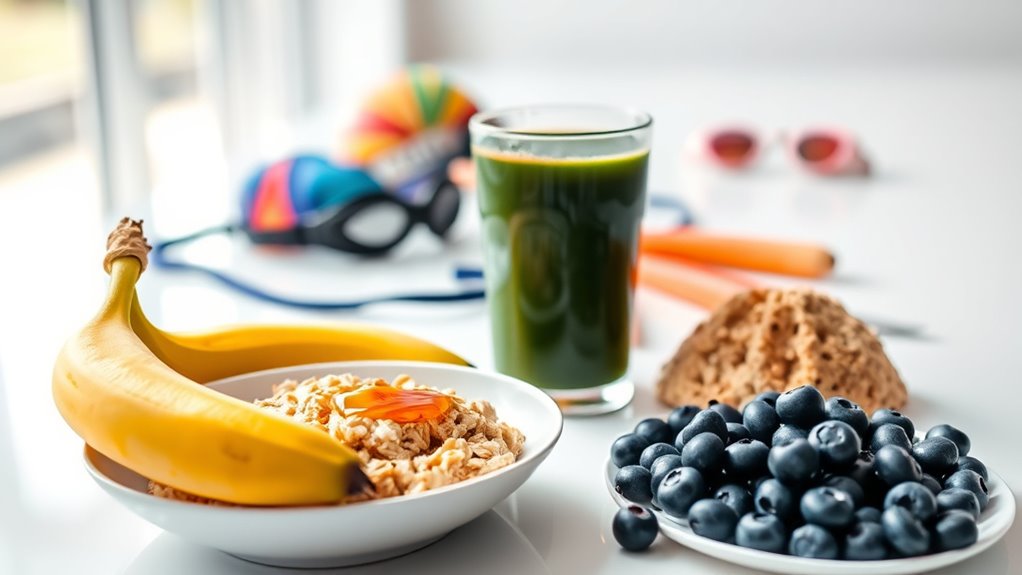
To fuel your swims, eat a carbohydrate-rich meal 1-3 hours before workouts, focusing on whole grains, fruits, and lean proteins. Stay hydrated by drinking water before entering the pool and sip on electrolyte-rich fluids during breaks. After swimming, rehydrate immediately and snack on options like banana with peanut butter or yogurt with berries to recover quickly. These strategies boost your performance and help with recovery. Discover more tips to enhance your swimming nutrition.
Key Takeaways
- Consume a carbohydrate-rich meal 1-3 hours before swimming to provide sustained energy for your workout.
- Include moderate protein in pre-swim nutrition to support endurance and muscle function.
- Rehydrate immediately after swimming to replace lost fluids and aid in recovery.
- Focus on post-workout snacks that combine carbohydrates and protein for optimal muscle repair.
- Maintain consistent hydration before, during, and after workouts to enhance performance and prevent dehydration.
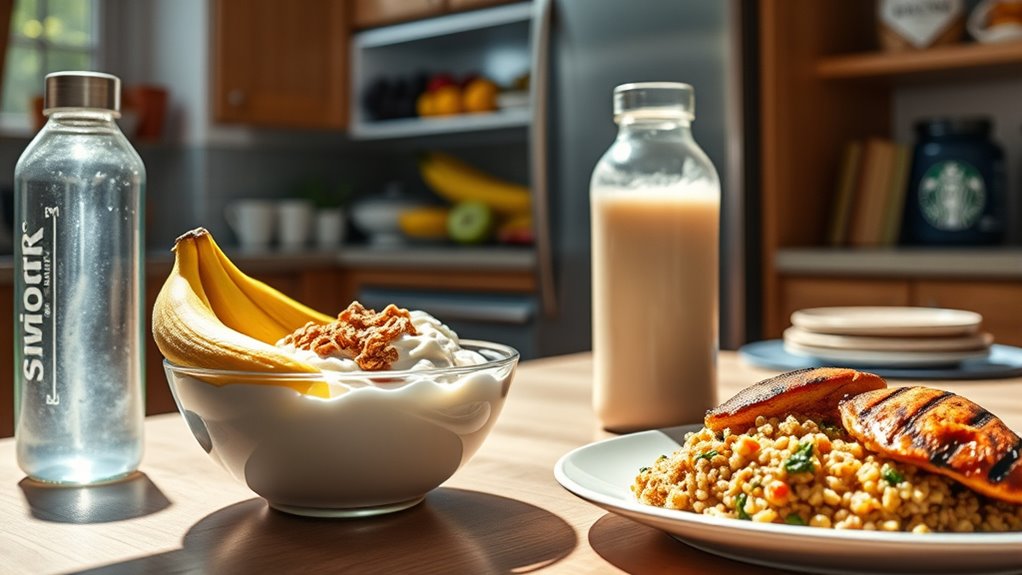
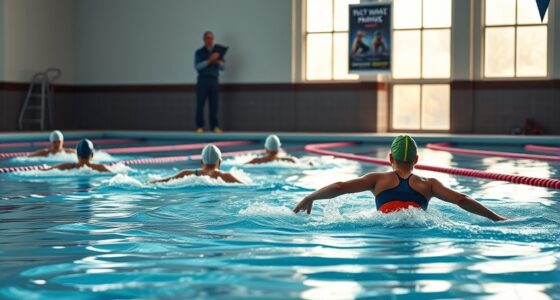
When you plunge into the pool, your body demands the right fuel to perform at its best. Swimming isn’t just about technique and endurance; it’s also about nutrition. You need to pay attention to what you eat and drink before and after your workouts. Proper hydration strategies can make a significant difference in your performance. Before you dive in, make sure you hydrate adequately. Water is essential, but consider incorporating electrolyte-rich drinks if you’re training intensely or for long durations. This helps maintain your body’s balance and keeps you feeling energized throughout your swim.
As you swim, your body loses fluids through sweat, which can lead to dehydration if you’re not careful. A good rule of thumb is to drink water before hitting the pool and then sip on fluids during breaks. After your workout, don’t skip rehydrating. Your muscles need that replenishment to recover and rebuild. It’s vital to replace lost fluids and restore your energy levels.
Now, let’s talk about fueling your body before you take the plunge. A meal rich in carbohydrates and moderate in protein about 1-3 hours before your swim can enhance your energy levels. Think whole grains, fruits, and lean proteins. These foods provide the energy you need to power through your workout. Avoid heavy, greasy meals; they can weigh you down and hinder performance.
Post-swim, your body craves recovery snacks. You’ll want to focus on a snack that combines both carbohydrates and protein to help repair muscles and replenish glycogen stores. A banana with peanut butter, yogurt with berries, or a smoothie with protein powder can do wonders. These options are quick and easy to digest, allowing your muscles to recover effectively.

BODYARMOR Sports Drink, Strawberry Banana, Electrolyte Drink Hydration, 12 Fl Oz Bottles (8 Pack), Flavored Coconut Water with B Vitamins & Antioxidants
BODYARMOR Sports Drink, the game-changing sports drink that harnesses coconut water for taste
As an affiliate, we earn on qualifying purchases.
As an affiliate, we earn on qualifying purchases.
Frequently Asked Questions
How Much Water Should Swimmers Drink Daily?
You should aim for about 3 to 4 liters of water daily, depending on your activity level and climate. Implementing hydration strategies like drinking before, during, and after workouts can make a big difference. Monitor your water intake to guarantee you’re staying properly hydrated, especially during intense training. Remember, staying hydrated helps maintain your performance and recovery, so keep that water bottle handy and drink up throughout the day!
Are Protein Supplements Necessary for Swimmers?
Protein supplements aren’t strictly necessary for swimmers, but they can be beneficial. If you struggle to meet your protein needs through whole foods, consider using them. Focus on protein timing; consuming protein after workouts aids recovery. Popular supplement types include whey and casein, which digest at different rates. However, prioritize a balanced diet first, and use supplements as a convenient option to fill any gaps in your nutrition.
What Are the Best Snacks for On-The-Go Swimmers?
You’ve got a busy schedule, and the clock’s ticking down to your next swim. For on-the-go snacks, energy bars and trail mix are your best bets. Energy bars provide quick carbs and protein, keeping you fueled without the fuss. Meanwhile, trail mix offers a blend of nuts and dried fruits, delivering sustained energy. Don’t let hunger hold you back—grab these snacks and conquer your workouts with confidence!
How Does Altitude Affect a Swimmer’s Nutrition?
Altitude affects your nutrition by altering oxygen levels in the environment. As you swim at higher elevations, your body needs more energy to perform due to decreased oxygen availability. You’ll need to increase your carbohydrate intake to fuel your workouts effectively and consider more hydration to combat altitude sickness. Monitoring your protein and fat intake is also vital, as your body may require adjustments to maintain performance and recovery.
Can Swimmers Benefit From Meal Prepping?
Yes, swimmers can definitely benefit from meal prepping. Studies show that meal planning can improve dietary consistency by up to 50%. When you prep meals ahead of time, you’re more likely to stick to your nutritional goals and avoid unhealthy choices. It saves you time, reduces stress, and guarantees you’ve got the right fuels ready for training and recovery. So, get organized and make meal prepping a part of your routine!
pre-swim carbohydrate snacks
As an affiliate, we earn on qualifying purchases.
As an affiliate, we earn on qualifying purchases.
Conclusion
As you glide through the water, feel the power of proper nutrition propelling you forward. Fueling your body before and after workouts isn’t just about performance; it’s about creating a symphony of energy and recovery. Picture vibrant fruits and hearty grains dancing on your plate, ready to energize your strokes and replenish your muscles. By nourishing yourself wisely, you’re not just swimming—you’re crafting a masterpiece of strength and endurance, ready to conquer every lap ahead.

Chobani® 20g Protein Lowfat Greek Yogurt Cherry Berry 6.7oz 4PK
All natural ingredients
As an affiliate, we earn on qualifying purchases.
As an affiliate, we earn on qualifying purchases.

Sahara Sailor Water Bottle 32oz, Durable and Leakproof Water Bottles Motivational with Time Marker, Tritan, BPA Free, Wide Mouth with Easy Clean Brush for Gym, Travel, Home, School, Office (1 Bottle)
Stay Hydrated Throughout the Day: staying hydrated is often easier said than done. With the Sahara Sailor clear…
As an affiliate, we earn on qualifying purchases.
As an affiliate, we earn on qualifying purchases.